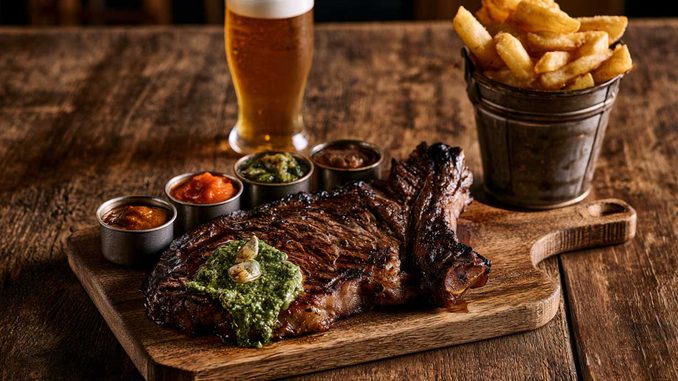
Discover 18 classic French sauces for meat, from béarnaise and Roquefort to bordelaise, with their ingredients, preparation methods and ideal pairings.
French cuisine has developed an extraordinary repertoire of sauces for meat, from the buttery richness of béarnaise to the intensity of bordelaise and the distinctive sharpness of Roquefort. Each sauce serves a purpose. Some complement the natural flavour of beef, while others balance the richness of pork, soften the delicacy of veal or bring acidity to duck and game.
The foundations of this tradition were codified by chefs such as Auguste Escoffier, whose Le Guide Culinaire, published in 1903, organised French sauces into systematic families. Many familiar preparations are variations on a few techniques: reduction, emulsification and the careful combination of stocks, wine, butter and aromatics.
This guide explores 18 French meat sauces and variations, explaining their ingredients, preparation methods and most successful pairings. From the simplest herb butter to a truffle-enriched Périgueux sauce, knowing which preparation belongs with which meat is an essential part of understanding French gastronomy.
The foundations of French sauces and their culinary importance
In classical French cooking, a sauce is not simply a finishing condiment. It is part of the architecture of a dish.
Auguste Escoffier’s culinary system established five principal sauce families: béchamel, velouté, espagnole, tomato and hollandaise. From these foundations, chefs developed numerous derivatives.
Three techniques are particularly important when preparing French sauces for meat.
Reduction concentrates wine or stock by evaporating water. Emulsification combines ingredients that would otherwise separate, as in béarnaise. Monter au beurre involves whisking cold butter into a warm sauce to give it body and a glossy finish.
These methods remain central to French culinary techniques and gastronomy.
The butter-based sauces traditionally served with steak
The béarnaise sauce: The classic companion to grilled beef
Sauce béarnaise is one of France’s most recognisable accompaniments to steak.
Unlike hollandaise, which relies primarily on butter, egg yolks and lemon, béarnaise introduces a reduction of white wine vinegar, shallots, peppercorns and tarragon.
For four servings, a traditional preparation uses two egg yolks, approximately 100 g clarified butter, 40 ml vinegar and two finely chopped shallots.
The vinegar mixture is reduced before the yolks are whisked over gentle heat. Clarified butter is then incorporated gradually to produce a thick emulsion.
The sauce should remain warm rather than hot. Excessive heat causes the egg proteins to coagulate and the emulsion to separate.
Best with: Entrecôte, côte de bœuf, filet de bœuf and grilled lamb.
The Choron and paloise sauces: Two distinctive béarnaise variations
Sauce Choron is essentially béarnaise enriched with concentrated tomato. The tomato introduces acidity, colour and a subtle sweetness.
It pairs particularly well with grilled beef and lamb chops.
Sauce paloise replaces tarragon with mint, giving the preparation a fresher character. It is especially suited to roast lamb, where the herb provides contrast to the meat’s pronounced flavour.
A further variation, sauce Foyot, enriches béarnaise with concentrated meat glaze, producing a more substantial accompaniment for beef.
The beurre maître d’hôtel: The simplest French steak accompaniment
Not every French meat preparation requires an elaborate sauce.
Beurre maître d’hôtel combines softened butter, finely chopped parsley, lemon juice, salt and pepper.
A practical ratio is 100 g butter, 10 g parsley and approximately 10 ml lemon juice.
The mixture is shaped into a cylinder, chilled and sliced over freshly cooked meat.
Best with: Steak-frites, grilled sirloin, lamb cutlets and veal chops.
The red wine and pepper sauces that define French bistro cooking
The sauce au poivre: The peppercorn sauce of Parisian bistros
Sauce au poivre is closely associated with steak au poivre, a familiar dish in French restaurants.
Crushed black or green peppercorns are heated with shallots before cognac, brandy or stock is added. Some versions contain cream; others rely on a concentrated meat reduction.
For four servings, a typical sauce might contain 10–15 g peppercorns, 50 ml cognac, 150 ml beef stock and 100 ml cream.
The pepper should remain aromatic rather than bitter. Burning it in the pan is a common mistake.
Best with: Filet mignon, entrecôte, tournedos and veal medallions.
The sauce bordelaise: The richness of red wine and bone marrow
Originating from the culinary traditions of Bordeaux, sauce bordelaise combines red wine, shallots, herbs, concentrated beef or veal stock and bone marrow.
The wine is reduced with shallots, thyme and bay leaf before the stock is incorporated. Poached bone marrow is added towards the end.
For a domestic preparation, 250 ml red wine, 250 ml concentrated stock and 40 g marrow provide a useful starting point.
Bone marrow distinguishes traditional bordelaise from many simpler wine reductions.
Best with: Beef fillet, rib steak and roasted beef.
The sauce marchand de vin: The lighter red wine alternative
Sauce marchand de vin also uses red wine and shallots, but generally omits marrow.
One simple version reduces 100 ml red wine with three shallots before incorporating 30 g butter, lemon juice and parsley.
Some classical preparations also contain demi-glace.
The result is less substantial than bordelaise, making it appropriate for cuts whose flavour should remain prominent.
Best with: Bavette, onglet, grilled sirloin and pan-fried beef.
The creamy French sauces made with cheese and mushrooms
The sauce au Roquefort: The unmistakable flavour of blue cheese
Roquefort sauce is particularly popular in French steak restaurants.
The cheese, made from sheep’s milk and matured with Penicillium roqueforti, provides pronounced saltiness and a characteristic tang.
To prepare the sauce, reduce finely chopped shallots with a little dry white wine or vermouth. Add approximately 150 ml cream and gently melt 80–100 g Roquefort into the mixture.
The sauce should not be boiled vigorously after the cheese is incorporated.
Best with: Entrecôte, rump steak, beef fillet and grilled pork.
Other French blue cheeses, including Bleu d’Auvergne and Fourme d’Ambert, produce milder variations.
The sauce forestière: The earthy appeal of mushrooms
Sauce forestière is built around sautéed mushrooms, typically combined with shallots, white wine and veal or poultry stock. Cream is frequently added in modern versions.
A mixture of 200 g mushrooms and 150 ml stock creates a practical base for four servings.
Button mushrooms produce a relatively delicate result. Cèpes, girolles and other wild mushrooms give greater intensity.
Best with: Veal escalopes, pork tenderloin, roast chicken and beef medallions.
The sauce aux morilles: The luxurious accompaniment to veal and poultry
Morels are especially prized in French gastronomy for their earthy aroma.
Sauce aux morilles typically combines cooked morels, shallots, white wine, poultry or veal stock and cream. In the Jura, vin jaune produces a distinctive regional interpretation.
The morels should be thoroughly cooked, not merely warmed through.
Best with: Veal sweetbreads, poularde, roast chicken and veal fillet.
The mustard and cider sauces traditionally paired with pork
The sauce moutarde: The sharpness of Dijon mustard
A classic Dijon mustard sauce combines shallots, white wine, stock, cream and mustard.
After reducing approximately 100 ml white wine, add 150 ml stock and 100 ml cream. Finish with one or two tablespoons of Dijon mustard.
Adding mustard towards the end helps preserve its pungent character.
Best with: Pork chops, rabbit, roast chicken and veal.
The sauce charcutière: The essential sauce for pork chops
Sauce charcutière is a derivative of sauce Robert, a preparation built around onions, mustard and a brown meat sauce.
The charcutière variation introduces finely cut cornichons.
Alain Ducasse’s published preparation for four pork chops includes 50 g onion, 100 ml white wine, 80 ml veal jus, 10 g mustard and 50 g cornichons.
The pickles provide the acidity needed to balance pork fat.
Best with: Pork chops, grilled sausages and roasted pork.
The Normandy cider sauce: The regional combination of apples and cream
Normandy’s culinary traditions make extensive use of cider, apples, butter and cream.
A typical cider sauce begins with shallots softened in butter. Dry cider is reduced, followed by poultry stock and crème fraîche. Some versions incorporate Calvados or sautéed apples.
The cider introduces acidity without the stronger tannins associated with red wine.
Best with: Pork tenderloin, roast chicken, guinea fowl and veal.
The traditional sauces for chicken, duck and delicate meats
The sauce chasseur: The French hunter’s sauce
Sauce chasseur combines mushrooms, shallots, white wine, tomato and demi-glace or concentrated stock.
Escoffier’s classical preparation also includes butter, chervil and tarragon.
The mushrooms are sautéed first, followed by shallots and wine. Once reduced, the stock and tomato components are incorporated.
Best with: Chicken, rabbit, pheasant and veal.
The sauce suprême: The refined white sauce for poultry
Sauce suprême derives from chicken velouté, traditionally made using poultry stock thickened with a pale roux.
The velouté is enriched with cream and reduced until it coats a spoon.
Its restrained flavour makes it particularly effective with delicately cooked white meat.
Best with: Poached chicken, poularde, turkey breast and veal.
The sauce bigarade: The classical orange sauce for duck
Sauce bigarade is the traditional accompaniment to canard à l’orange.
Unlike a simple sweet orange glaze, it balances citrus with vinegar, caramel and concentrated duck or poultry jus.
One preparation uses orange juice and zest, approximately 40–50 g sugar, vinegar and 200 ml duck jus.
The combination of sweetness and acidity cuts through duck fat.
Best with: Duck breast, roast duck and wild duck.
The powerful French sauces reserved for game and special occasions
The sauce grand veneur: The traditional accompaniment to venison
Sauce grand veneur belongs to France’s hunting tradition.
It is commonly derived from a red wine-based game sauce, enriched with aromatics, pepper, redcurrant jelly and sometimes cream.
The fruit contributes sweetness and acidity, balancing the pronounced flavour of venison.
Its association with autumn reflects the continuing importance of game in French restaurant cuisine.
Best with: Venison, wild boar and other strongly flavoured game.
The sauce Périgueux: The elegance of Madeira and black truffle
Named after Périgueux in the Dordogne, this classical preparation combines demi-glace, Madeira wine and black truffle.
The Madeira is reduced before being incorporated into the meat sauce. Finely chopped truffle is added to preserve its distinctive aroma.
The result is intense and aromatic. It requires relatively small portions.
Best with: Beef tournedos, veal fillet, foie gras preparations and roast poultry.
The cold French sauces that deserve more attention
The sauce gribiche: The sharp alternative to rich meat sauces
Sauce gribiche is prepared with hard-boiled eggs, mustard, oil, vinegar, cornichons, capers and fresh herbs.
The cooked yolks help create the dressing, while chopped egg whites and pickles provide texture.
Unlike creamy sauces, gribiche is served cold or at room temperature.
Best with: Tête de veau, boiled beef, cold roast pork and pot-au-feu leftovers.
The practical rules for choosing the right French sauce
The relationship between meat and sauce depends primarily on fat content, cooking technique and flavour intensity.
Richly marbled beef benefits from acidity or pepper. Lean fillet can support butter-based emulsions or concentrated reductions. Pork pairs particularly well with mustard, cornichons and cider. Poultry generally favours lighter stocks, mushrooms and cream, while duck requires more assertive acidity.
The same logic applies to the regional meat dishes explored throughout traditional French food and regional gastronomy.
A successful sauce should coat the meat without concealing its texture. Wine reductions require patience; butter emulsions demand gentle heat; cream sauces must be seasoned carefully.
French gastronomy offers hundreds of named sauces and variations. Their continuing relevance rests on a simple principle: a sauce should make the main ingredient taste more distinctive, not less.