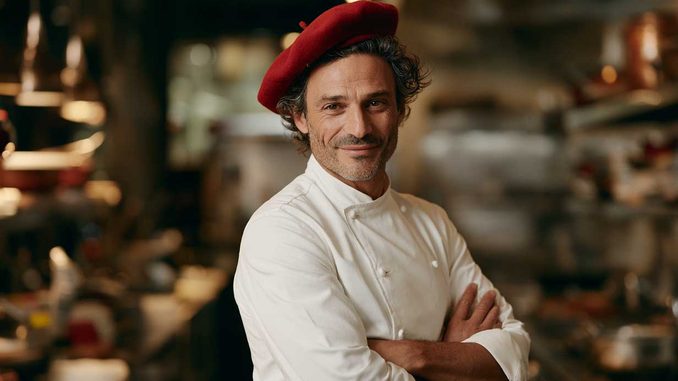
Discover the French chefs shaping American dining, from New York and California to Texas and Hawaii, their restaurants, signature dishes and influences.
French chefs have influenced American restaurants for generations, but their contribution extends well beyond the grand dining rooms of New York and California. Across the United States, chefs born and trained in France are adapting classical techniques to regional ingredients, from Southwestern chillies and Hawaiian seafood to Southern produce and Midwestern dairy.
Éric Ripert remains a defining figure in American seafood cooking, while Dominique Crenn has developed a distinctive Californian interpretation of French haute cuisine. Elsewhere, Vincent Guérithault has spent 40 years combining French cooking with Arizona flavours, and Nico Romo applies Lyonnais technique to South Carolina oysters.
This state-by-state investigation identifies notable French chefs, their restaurants and the dishes that best represent their work. It also exposes an important limitation: not every state has a publicly verifiable French-born chef currently operating a restaurant. Rather than invent a national ranking, the selection distinguishes established chefs, specialist pastry makers and locations where reliable information remains insufficient.
The French Influence That Has Changed American Dining
French cooking has supplied much of the technical vocabulary of American fine dining: reductions, emulsions, stocks, pâtisserie and the organisation of a professional kitchen. Yet the most interesting French chefs working in the United States rarely reproduce their homeland’s cooking unchanged.
The American landscape transforms it. Arizona introduces chillies and Mexican influences. Hawaii offers tropical fruit and Pacific seafood. Louisiana adds Creole traditions with deep historical connections to France.
Many of these chefs began their careers in the distinct culinary cultures of France’s regions and cities. Their American restaurants reveal what happens when those traditions encounter a different landscape.
The following is an editorial selection, not an official ranking. Each chef’s French background and professional association have been assessed separately. Where no documented signature dish exists, the representative speciality is identified instead.
The Northeast: From Manhattan Seafood to New England Bistros
The New York and Mid-Atlantic Kitchens
New York — Éric Ripert, Le Bernardin, Manhattan. Born in Antibes, Ripert has made seafood the centre of one of America’s most influential fine-dining restaurants. His lightly cooked fish and refined sauces demonstrate the French conviction that technique should reveal an ingredient rather than conceal it. Tuna preparations are among the restaurant’s defining classics.
New Jersey — Éric Truglas, The Ridge, Basking Ridge. A Paris native and Maître Cuisinier de France, Truglas combines classical training with seasonal ingredients from American farms and fisheries. His speciality is contemporary, produce-led hotel cuisine rather than one permanently established signature dish.
Pennsylvania — Abigail Dahan, Provenance, Philadelphia. Born near Paris and trained at École Grégoire Ferrandi, Dahan works in fine pâtisserie. Her desserts bring French precision to a restaurant whose wider cuisine incorporates Korean influences. She was a 2025 James Beard Award semifinalist for Outstanding Pastry Chef or Baker.
Maryland — Alain Roussel, La Ferme, Chevy Chase. A longstanding Maître Cuisinier de France, Roussel represents the enduring appeal of traditional French country cooking. His establishment is associated with classic restaurant hospitality rather than experimental cuisine.
The New England Dining Rooms
Connecticut — Guillaume Traversaz, Bar Bouchée, Madison. A fourth-generation French chef with roots in the Alps, Traversaz brings the convivial cooking of the bouchon to coastal Connecticut. Seasonal bistro fare, carefully prepared sauces and local ingredients define his approach.
Massachusetts — Jacky Robert, Ma Maison, Boston. Robert belongs to the generation that helped establish French restaurant culture in America. His cooking celebrates familiar bistro dishes, supported by a career that has also included Asian-influenced interpretations of French cuisine.
Vermont — Hervé Mahé, Bistro de Margot, Burlington. Trained in France and shaped by international kitchens, Mahé combines French technique with Vermont produce. His Salade Margot, featuring lettuce, radishes, quail egg and Dijon dressing, reflects a preference for clarity over unnecessary complication.
The South: French Technique Meets American Regional Identity
The Southern Restaurants With Distinctive Personalities
Florida — Olivia Ostrow, Maison Ostrow, North Bay Village, Miami. Paris-born Ostrow specialises in French-Mediterranean kosher cuisine. Her 2026 menu included trout meunière and a signature Wagyu burger with truffle fries. She also developed a baguette-based sandwich concept featuring duck confit.
Georgia — Christophe Joignant, Capital City Club Brookhaven, Atlanta. A member of Maîtres Cuisiniers de France, Joignant works in private-club hospitality. His professional role is documented, although a publicly established signature dish is not.
Louisiana — Laura-Inès René-Corail, Maison Rêvant, New Orleans. Born in Martinique, a French overseas territory, and trained at École Grégoire Ferrandi, René-Corail opened her restaurant in September 2026. Braised octopus with coconut béchamel and spiced pompano jambalaya unite French, Caribbean and Louisiana traditions.
North Carolina — Thierry Moity, Caprice Bistro, Wilmington. Moity’s restaurant represents the intimate French bistro tradition. Published menus feature duck breast with orange gastrique, escargots with Roquefort cream and seafood preparations associated with northern France.
South Carolina — Nico Romo, NICO Oysters + Seafood, Mount Pleasant. Born in Lyon, Romo interprets Lowcountry seafood through French techniques, particularly wood-fired cooking. Oysters are central to his restaurant’s identity. His wider hospitality group also includes Bistronomy by Nico and Laura.
Tennessee — José Gutierrez, River Oaks, Memphis. Born in Provence and trained in the tradition of Paul Bocuse, Gutierrez spent decades developing a French-American style. His restaurant combines classical technique with Southern ingredients, local sourcing and seasonal menus.
Virginia — Bertrand Chemel, 2941 Restaurant, Falls Church. Raised in Auvergne and subsequently mentored in American kitchens associated with Daniel Boulud, Chemel prepares contemporary French-American cuisine using Virginia produce and herbs.
The contrast between these restaurants is revealing. In New Orleans, French cuisine meets traditions that are already partly French. In Charleston, it encounters seafood, regional farming and the Southern appetite for generous cooking.
The Midwest: French Pâtisserie, Regional Produce and Classical Sauces
The Restaurants Beyond America’s Traditional Gourmet Capitals
Illinois — Katia Soujol, Kimpton Gray Hotel and Boleo, Chicago. Originally from Grasse, Soujol brings Mediterranean and French culinary training to a rooftop restaurant specialising in South American flavours. Her career demonstrates that French influence can reside in technique even when the menu is not predominantly French.
Michigan — Jean-Gabriel Ferrandon, Gaby’s Gourmandise, Grand Rapids. Born and trained in France, Ferrandon produces quiches, savoury tarts, pastries and biscuits. He combines French recipes with locally sourced Michigan ingredients and selected French imports.
Minnesota — Marc Heu, Marc Heu Pâtisserie Paris, St. Paul and Minneapolis. Born in France into a Hmong family, Heu combines Parisian pastry training with his heritage and adopted Midwestern home. Croissants, seasonal tarts and elaborate cakes form the heart of his business.
Missouri — Emmanuel Langlade, Aixois, Kansas City. A native of Aix-en-Provence, Langlade built his reputation around Provençal cuisine and seasonal Midwestern produce. Hanger steak, duck and chocolate mousse are representative bistro dishes. His original Missouri restaurant remains the relevant location; the former Kansas branch closed in 2025.
Ohio — Richard Blondin, The Refectory, Columbus. Born in Lyon and trained under chefs including Paul Bocuse, Blondin is especially associated with classical sauces and refined French-American dining. The restaurant celebrates its 50th anniversary in 2026 and maintains a wine selection exceeding 700 labels.
Oklahoma — Alain Buthion, La Baguette Bistro, Oklahoma City. Raised in southern France, Buthion has established a lasting local following for croque-monsieur, chicken crêpes, pastries and bistro cooking. A November 2026 event menu features coq au vin and onion soup.
Nebraska — Cédric Fichepain, Omaha. French-born Fichepain helped establish Le Voltaire and Le Petit Paris bakery. His influence on Omaha’s French dining culture is well documented, although his present operating role requires confirmation. Le Voltaire should not be described as his current restaurant.
Iowa — David Baruthio, Des Moines. Baruthio introduced French tasting-menu dining at Café Madeleine, including a nine-course format for just 16 guests. However, the original premises were being replaced by another business in 2026. His current restaurant address cannot be confirmed reliably.
French influence in these states is particularly visible in the craft of French pâtisserie. A croissant, an intricate fruit tart or a properly prepared quiche can communicate technical discipline as clearly as a luxury tasting menu.
The West: Where French Cooking Becomes Something New
The Pacific Coast and Mountain Restaurants
California — Dominique Crenn, Atelier Crenn, San Francisco. Born in Versailles and raised in Brittany, Crenn has developed a highly personal seafood-led cuisine. Her poetic tasting menus draw on the coast, sustainable sourcing and artistic presentation, moving beyond conventional French restaurant structures.
Colorado — Ludo Lefebvre, Petit Trois at MOLLIE Aspen. The Burgundy-born chef brought his Los Angeles bistro concept to Aspen in December 2025. Omelette Petit Trois, Burgundy escargots and the Big Mec burger show how a fundamentally French menu can accommodate American dining habits.
Oregon — Joris Barbaray, Bergerac, Portland. Raised in Bergerac, Barbaray draws on the Dordogne’s cooking traditions. His restaurant emphasises French country food, seasonal produce and the hospitality of a neighbourhood bistro.
Washington — Orphée Fouano, Mirabelle by Orphée, Seattle. Paris-born Fouano trained at renowned French palace hotels before opening his own Seattle café. Croissants, pain au chocolat and leek-and-goat-cheese quiche illustrate his combination of rigorous pastry technique and approachable café dining.
Hawaii — Alexandre Trancher, La Mer, Honolulu. Originally from Paris, Trancher has led La Mer’s cuisine since joining Halekulani in 2012. His speciality is refined French cooking incorporating Hawaiian seafood and locally grown ingredients. The restaurant received both AAA Five Diamond and Forbes Five-Star recognition in 2026.
Arizona — Vincent Guérithault, Vincent on Camelback, Phoenix. One of America’s clearest examples of French culinary adaptation, Guérithault celebrated his restaurant’s 40th anniversary in 2026. His lobster chimichanga, smoked-salmon quesadilla and duck-confit tamales combine French technique with Southwestern flavours.
Nevada — Yuri Szarzewski, Partage, Las Vegas. The French chef-owner delivers contemporary tasting-menu cuisine. A duck-breast pithivier with foie gras and mushroom duxelles exemplifies his highly technical approach.
Utah — Thomas Bernard, Le Depot, Park City. Born and trained in France, with experience in kitchens associated with Alain Ducasse, Bernard adapts classical French gastronomy to local Utah ingredients and the appetite for mountain-resort dining.
The States Where a French-Born Chef Cannot Yet Be Reliably Identified
A complete survey must also account for the remaining states. They are Alabama, Alaska, Delaware, Idaho, Indiana, Kansas, Kentucky, Maine, Mississippi, Montana, New Hampshire, New Mexico, North Dakota, Rhode Island, South Dakota, West Virginia, Wisconsin and Wyoming.
There are French restaurants in several of these places. That is not equivalent to confirming that their chefs are French.
Mississippi offers an instructive example. Hunter Evans produces acclaimed Southern-French cooking at Elvie’s in Jackson, but he is a Jackson native. In Wisconsin, Kyle Knall’s CASSIS, which opened in Milwaukee in January 2026, celebrates French bistro food, yet Knall is American-born.
Montana illustrates another distinction. French-born restaurateur Bader L. established Nissa in Bozeman in 2026, but available reporting establishes ownership rather than proving a current role as its executive chef.
Listing these individuals as French-born chefs simply to fill a geographical gap would mislead readers.
The French Legacy That America Has Made Its Own
The most influential French chefs in America have not succeeded by turning American cities into replicas of Paris.
Guérithault’s lobster chimichanga would make little sense without Arizona. René-Corail’s coconut béchamel expresses a Caribbean heritage that cannot be reduced to metropolitan French cooking. Romo’s oysters depend on the waters of South Carolina.
They are also evidence that French technique is transferable. A sauce, a pastry or a carefully structured dish can retain its identity while changing its ingredients.
That may be the more useful measure of French culinary influence in the United States: not the number of restaurants serving steak frites, but the number of chefs who have made a distinct American place central to their cooking.