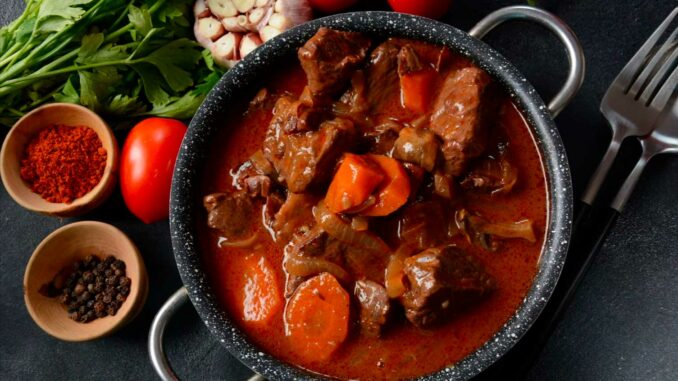
A technical, no-nonsense guide to boeuf bourguignon: cuts, wine, heat control, timing, and serving choices that decide if it is great or dull.
Boeuf bourguignon is not “just a stew.” It is a controlled braise built on three pillars: deep browning, a wine-forward liquid, and time at a low simmer. The cultural weight comes from Burgundy’s identity: cattle, vineyards, and farmhouse cooking that later became restaurant food. The dish looks rustic, but it punishes sloppy technique. If you crowd the pan, you steam the beef and the sauce tastes thin. If you use harsh wine, you get harsh results. If you boil, the meat turns stringy. A proper version uses collagen-rich beef (often chuck-type cuts), dry, well-browned beef, a full-bodied Burgundy red (or a similar Pinot Noir), aromatics, and a bouquet garni. The sauce should coat a spoon, not run like soup. Make it the day before. Reheating is not a hack. It is part of the method.
The dish that turned Burgundy into a national shorthand
Boeuf bourguignon (often written bœuf bourguignon) sits at the intersection of peasant logic and French culinary status. The logic is simple: take tougher beef, add wine, cook slowly, and turn cheap muscle into something tender and aromatic. Burgundy made that equation famous because it has both cattle country (Charolais is often cited) and a deep red-wine culture. That pairing is not marketing. It is the regional pantry.
Here is the frank part. The “tradition” is less ancient than people pretend. The modern restaurant-era codification is often linked to early 20th-century French cuisine writing, which helped move the dish from farmhouse pots to bourgeois tables. In practice, what matters today is not the romance. It is whether you respect the physics: browning creates flavor; collagen needs time; wine needs enough heat and time to round its edges.
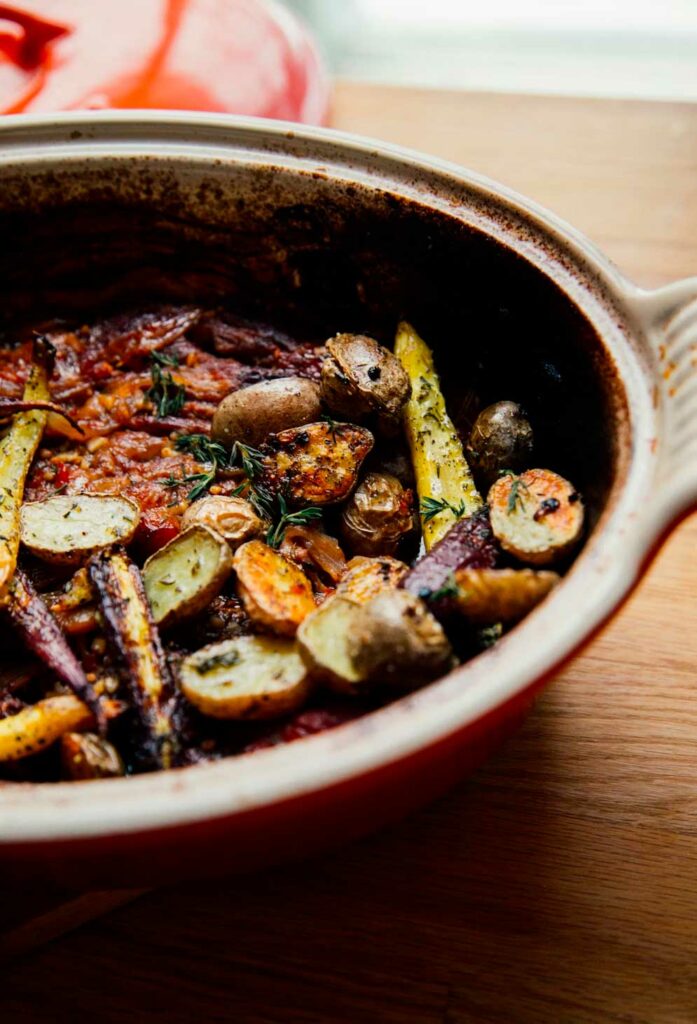
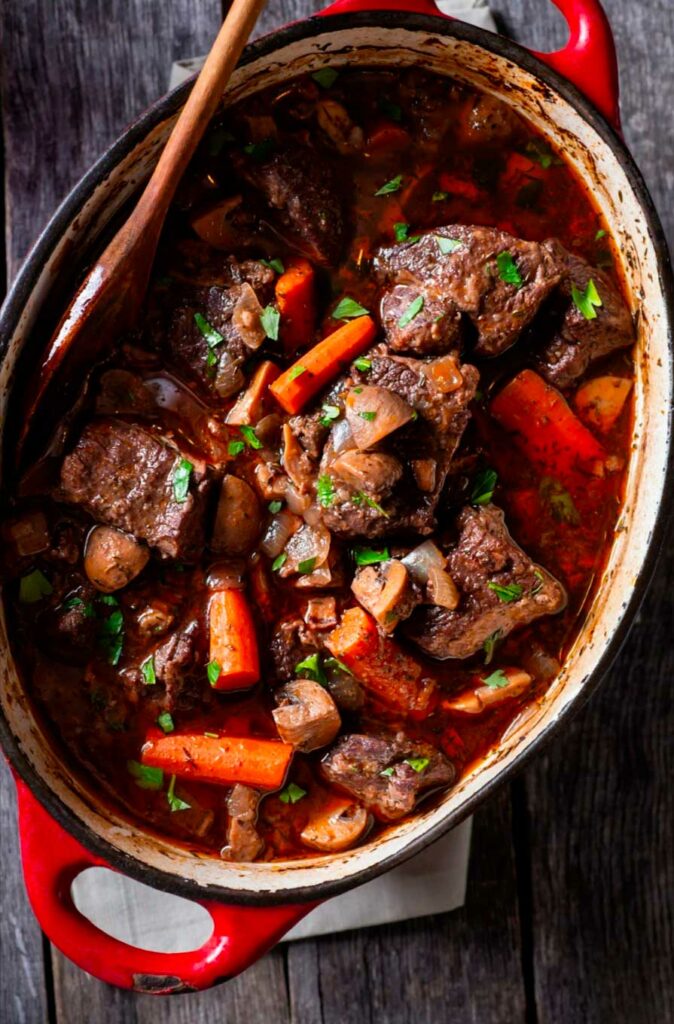
The ingredients that actually matter
A good bourguignon does not require rare products. It requires correct choices.
The beef cuts that win, and the ones that disappoint
Pick cuts with collagen and intramuscular fat. Aim for 1.5 to 2.0 kg for 6 to 8 servings.
Best options:
- Beef chuck (paleron, macreuse): reliable texture after 3 hours.
- Beef shin (jarret): intense gelatin, but can feel richer.
- Beef cheek (joue): very tender, but easy to over-soften.
- Brisket (poitrine): works, but watch dryness if too lean.
Avoid “stew cubes” from random trimmings. You get uneven cooking. Some pieces turn dry while others stay tough. Cut your own cubes: 4 to 5 cm. Smaller pieces dry out faster.
The wine choice that makes or breaks the sauce
Use wine you would actually drink. If it tastes sharp and thin in the glass, it will not become noble in a pot. Burgundy Pinot Noir is the classic reference, but you do not need to spend luxury-bottle money. A solid regional Bourgogne rouge is enough. If you cannot access Burgundy, choose a Pinot Noir with moderate oak and good fruit, or a similar-bodied red.
Plan 600 to 750 ml (about 20–25 fl oz) wine for 1.8 kg beef, plus 300 to 600 ml stock depending on your pot size. The point is a wine-led braise, not a timid “splash.”
The aromatic base that keeps it from tasting flat
Core aromatics are not negotiable: onions, carrots, garlic, and herbs. A classic bouquet garni is thyme + bay leaf + parsley stems. Clove and peppercorns appear in some traditional approaches, especially if you build a marinade, but do not turn it into potpourri.
The garnish usually includes mushrooms and pearl onions. Lardons (small bacon pieces) are common in many modern and professional-style versions and bring fat and smoke.
The thickening method that stays elegant
You have three main routes:
- Flour dusting on browned beef (simple, classic, but can taste pasty if rushed).
- A beurre manié finish (butter + flour) added late for control.
- Pure reduction (cleanest flavor, but needs time and surface area).
If you want the least risk, use a light flour dusting early, then rely on reduction to finish.
The preparation choices that separate “good” from “why is it bitter?”
The marinade: useful, not mandatory
Marinating beef in wine can add aroma, but it does not replace browning. Also, acidic liquid does not “tenderize” deep muscle the way people claim. It can slightly change the surface. The real tenderizing happens during the braise.
If you do marinate, keep it practical:
- 8 to 12 hours in the fridge.
- Wine + sliced carrots and onions + garlic + bouquet garni.
- Drain well and pat the beef dry before browning. Wet beef does not brown. It steams.
The browning: the moment most home cooks sabotage
You need a very hot pan, dry meat, and space. Work in batches. This is not optional “chef fuss.” It is the flavor engine.
Rules that save you:
- Pat beef dry with towels.
- Use a heavy pot (cast iron is ideal).
- Brown in a thin layer of oil plus rendered fat from lardons if using.
- Do not move pieces constantly. Let crust form.
If you skip this, the sauce tastes like boiled wine. People then “fix” it with sugar or extra stock. That is how bourguignon becomes vague.
The step-by-step method that holds up under scrutiny
This method targets 6 to 8 servings.
The mise en place that prevents chaos
- Beef: 1.8 kg, cut into 4–5 cm pieces.
- Lardons: 150–200 g.
- Carrots: 250–300 g, sliced 5–8 mm.
- Onions: 1 large (or 2 medium), chopped.
- Garlic: 2–4 cloves, crushed.
- Tomato paste: 15–30 g (optional, but helpful for depth).
- Flour: 20–30 g (about 2 tablespoons).
- Red wine: 750 ml.
- Beef stock: 300–500 ml.
- Pearl onions: 300–400 g.
- Mushrooms: 300–400 g, quartered.
- Herbs: thyme, bay leaf, parsley stems.
- Salt, black pepper.
The browning and deglazing phase
- Render lardons on medium heat for 5 to 8 minutes. Remove them. Keep the fat.
- Brown beef in batches on medium-high heat. Count 2 to 3 minutes per side. Pull each batch.
- In the same pot, brown onions and carrots for 6 to 8 minutes. Add garlic for 30 seconds.
- Stir in flour for 1 minute. You want it lightly cooked, not raw.
- Deglaze with a small splash of wine. Scrape the pot. Those browned bits are the point.
The braise phase: where patience matters more than talent
- Return beef and lardons to the pot.
- Add remaining wine, then add stock until the beef is just mostly covered.
- Add herbs and (optionally) tomato paste.
- Bring to a gentle simmer on the stove.
Then choose your heat path:
- Oven braise: 160°C (325°F) for 2.5 to 3.5 hours. This is steady and forgiving.
- Stovetop braise: keep a bare simmer. No rolling boil. Expect more monitoring.
Your target is tenderness you can cut with a spoon edge, but not mush. Start checking at 2 hours. Some cuts need 3.5 hours.
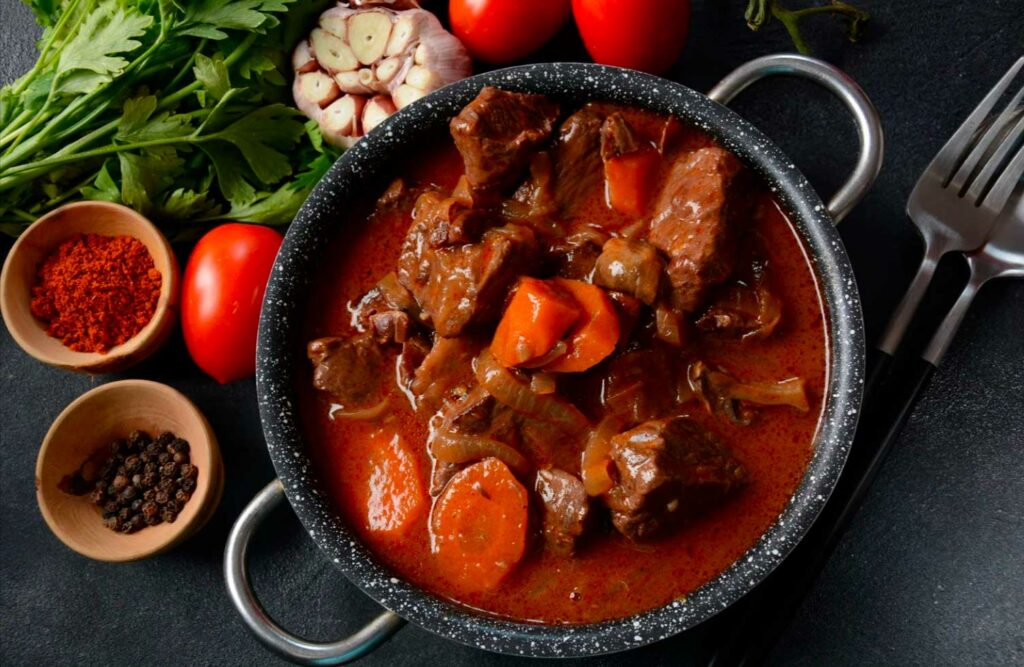
The garnish phase: keep mushrooms and onions alive
Pearl onions and mushrooms turn sad if you simmer them for three hours in wine. Cook them separately.
- Sauté mushrooms on high heat in a wide pan with a little oil and butter. Give them 6 to 8 minutes. You want browning, not watery collapse.
- Glaze pearl onions: sauté gently, add a small splash of stock, cover, and simmer 10 to 15 minutes until tender.
Add both to the pot in the last 20 to 30 minutes, or even only at reheating.
The sauce finish: texture without heaviness
- Remove herbs. Skim excess fat if needed.
- Reduce the sauce uncovered for 10 to 20 minutes if it is thin.
- Adjust salt and pepper at the very end. Wine reduction concentrates salt quickly.
If it still feels thin, add a small beurre manié (equal parts soft butter and flour, kneaded) in small pieces while simmering. Stop once the sauce coats a spoon.
The serving rules that respect the dish
Boeuf bourguignon is richer than it looks. Serve it hot, but not boiling. Let it rest 10 minutes off heat before plating. The sauce thickens slightly and tastes rounder.
Portion reality:
- 220 to 280 g beef per adult is enough.
- Too much looks generous but eats heavy.
Serve in warm bowls or deep plates. Ladle sauce first, then beef, then garnish. This keeps the meat glossy, not dry.
The side dishes that make sense, and the ones that do not
Classic sides exist for a reason. They absorb sauce and calm the richness.
Most coherent options:
- Buttered mashed potatoes.
- Tagliatelle or wide egg noodles.
- Potato purée with a restrained butter ratio.
- Steamed potatoes, then lightly buttered and salted.
- A crusty baguette, if you accept the rustic approach.
If you want vegetables, keep them sharp:
- Green beans with a little butter and lemon.
- A simple salad with mustard vinaigrette.
Avoid sweet sides. Avoid heavy gratins. The dish is already dense.
The mistakes that ruin bourguignon, no matter your recipe
- Crowding the pan. You steam the beef.
- Using cheap, harsh wine. You get harsh sauce.
- Boiling instead of simmering. You get dry fibers.
- Over-thickening early. Flour taste lingers.
- Cooking mushrooms in the main pot for hours. They become sponges.
- Serving the same day without rest. It tastes less integrated.
One more blunt truth: bourguignon is often better on day two. Not because of magic. Because fat, gelatin, and aromatics settle into a more coherent sauce after chilling and reheating slowly.
Cook in France is your independant source for food in France.