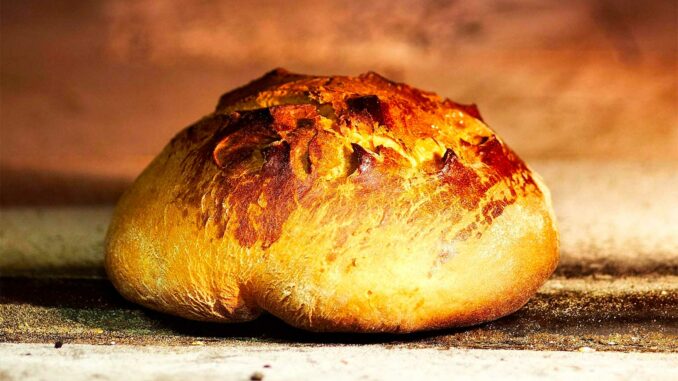
Gochtial is an Alsatian brioche unlike any other. Origins, recipe, technique, and why this humble loaf stands apart from classic French brioches.
Gochtial is a traditional brioche from Alsace, rooted in rural baking rather than urban pastry shops. It looks simple, almost plain, but that is the point. This bread sits between brioche and farmhouse loaf. It uses fewer eggs, less sugar, and less butter than classic French brioches. The dough is firm. The crumb is tight. The taste is discreet and grain-forward. Gochtial was never meant to impress with richness. It was designed to last, to slice cleanly, and to be eaten every day. Its origins lie in the southern Alsace countryside, where wheat, dairy, and practicality shaped baking habits. Gochtial is still baked today in Alsatian homes and bakeries, especially for weekends and family meals. It is eaten plain, with butter, jam, or sometimes savory toppings. Understanding Gochtial means understanding a different idea of brioche: one based on restraint, structure, and regional logic rather than indulgence.
The origin of a brioche born from Alsatian rural life
Gochtial is not a modern creation. It emerged in southern Alsace, particularly in rural areas close to the Sundgau, where farming shaped daily food. Bread had to be filling, durable, and easy to portion.
Unlike festive brioches linked to religious holidays or city guilds, Gochtial belonged to ordinary households. It was baked at home or by village bakers for regular consumption. Its role was clear. It replaced standard bread at breakfast or afternoon meals while offering a slightly enriched dough.
The name “Gochtial” comes from Alsatian dialect. It refers to something cooked or baked thoroughly. That linguistic root already says a lot. This is not a light, airy pastry. It is a well-baked, structured loaf designed to hold.
The region that shaped its ingredients and technique
Alsace sits at the crossroads of French and German baking traditions. The region values structure, fermentation control, and moderate sweetness. This context explains why Gochtial differs from Parisian brioche.
Butter was available, but not abundant. Eggs were precious. Sugar was not used casually. As a result, Gochtial developed with restrained enrichment. Flour quality mattered more than fat content.
Local wheat varieties, often milled with less refinement in the past, produced doughs that required strength. Bakers adapted by kneading longer and baking more thoroughly. The result was a loaf that aged well and stayed edible for several days.
The ingredients that define Gochtial clearly
A true Gochtial relies on a short list of ingredients. Each one plays a structural role.
Flour is usually wheat flour with moderate protein content, around 10 to 11%. This allows gluten development without excessive elasticity.
Milk is used instead of water, but in limited quantity. It softens the crumb without turning it into cake.
Butter is present, but at roughly 80 to 120 g per kilogram of flour. Classic brioche can exceed 400 g per kilogram. The difference is decisive.
Eggs are few. Often two or three per kilogram of flour. Some traditional recipes use only yolks, others whole eggs.
Sugar remains low, commonly between 40 and 80 g per kilogram of flour. This keeps sweetness in check.
Yeast is used sparingly, typically around 10 to 20 g of fresh yeast per kilogram of flour (about 3 to 6 g dry yeast).
Salt is not optional. Around 18 to 20 g per kilogram of flour, reinforcing flavor and dough strength.
The result is a low-fat brioche dough that behaves closer to bread than pastry.
The method that explains its dense and regular crumb
Gochtial dough is mixed longer than rich brioches. The goal is not extreme aeration. The goal is uniformity.
Kneading develops gluten fully before butter is added. Butter is incorporated gradually, never melted. This prevents the dough from loosening too much.
Fermentation is moderate. Bulk fermentation usually lasts 1.5 to 2 hours at around 22 °C (71.6 °F). The dough rises, but it does not double dramatically.
Shaping is simple. The dough is formed into a round or slightly oval loaf. There is no braiding, no molds, no decorative cuts.
Proofing is controlled. Overproofing would destroy the tight crumb. Bakers look for a slow, steady rise, often 45 to 75 minutes.
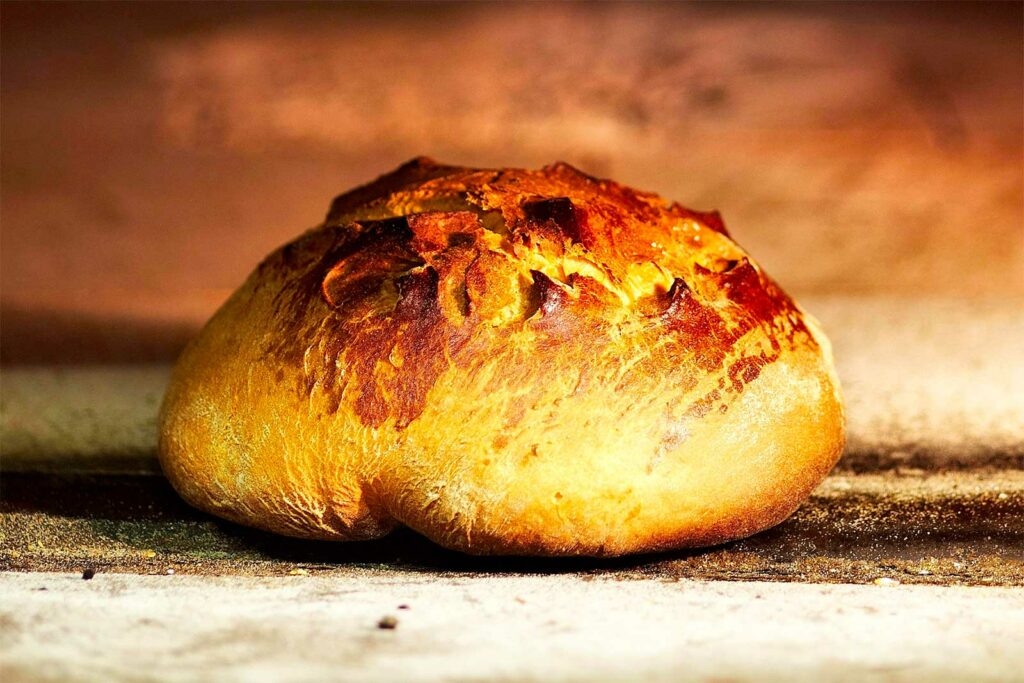
Baking is firm. Gochtial is baked at around 170 to 180 °C (338 to 356 °F) for 35 to 45 minutes, depending on size. The crust is dry, lightly golden, and resilient.
This method produces a compact and even crumb, without large air pockets.
The texture and taste that set it apart
Gochtial does not melt in the mouth. That is deliberate.
The crumb is tight but soft. It slices cleanly without tearing. This makes it ideal for spreading butter or jam without crumbling.
The taste is subtle. You taste wheat first. Then dairy notes. Sweetness stays in the background. There is no strong egg aroma.
This restraint is why Gochtial pairs well with both sweet and savory foods. It works with honey, but also with cheese or smoked ham.
Compared to rich brioche, Gochtial feels honest. Nothing is hidden behind fat or sugar.
The difference between Gochtial and other French brioches
Calling Gochtial “just another brioche” is inaccurate.
Parisian brioche is a celebration product. It is rich, soft, and highly aerated. It stales quickly.
Vendée brioche focuses on aroma, with orange blossom or alcohol. It is festive and perfumed.
Nanterre brioche emphasizes visual form and pull-apart crumb.
Gochtial rejects all of this. It prioritizes durability, neutrality, and daily use.
The fat content alone explains much of the difference. A classic brioche may contain 40% butter relative to flour. Gochtial rarely exceeds 12%.
That gap changes everything: handling, fermentation, shelf life, and taste.
The cultural role of Gochtial in Alsace
Gochtial was not reserved for holidays. It belonged to weekly routines.
It appeared on breakfast tables, often sliced thick. Children took it to school. Adults ate it with coffee or chicory drinks.
Because it kept well, families baked it once or twice per week. It bridged the gap between bread and treat.
Even today, many Alsatian bakeries sell Gochtial on weekends. It remains a marker of regional identity rather than a tourist product.
This discretion partly explains why it is less known outside Alsace.
The modern place of Gochtial in bakeries today
Gochtial survives, but it competes with softer, sweeter products.
Industrial bakeries rarely produce it. The margins are lower. The texture does not match mass-market expectations.
Artisan bakers keep it alive, often using slightly updated methods. Some increase butter modestly. Others enrich the dough with cream.
Purists argue this weakens the product. Others see it as adaptation.
What matters is that the core idea remains: a restrained Alsatian brioche built on structure, not excess.
The nutritional profile that reflects its origins
Gochtial is often perceived as lighter, and that perception is accurate.
Lower butter and sugar reduce overall fat and calorie density. A typical slice of 50 g provides fewer calories than an equivalent slice of rich brioche.
The higher flour ratio also increases satiety. You feel full sooner.
This was never a health strategy. It was an economic and agricultural one. But the effect remains relevant today.
The reason Gochtial still matters
Gochtial reminds us that brioche is not a single idea. It is a family of doughs shaped by geography, resources, and habits.
In an era of uniform softness and exaggerated sweetness, Gochtial offers resistance. It values balance over indulgence.
Its future depends on bakers who accept that not every product needs to be spectacular. Some need to be reliable, honest, and rooted.
If Alsace keeps telling that story, Gochtial will not disappear. It will remain what it has always been: a quiet standard, not a showpiece.
Cook in France is your independant source for food in France.