How the French meal structure, fixed hours, and fewer snacks reduce late-night takeout, limit overeating, and shape obesity gaps vs the US and the UK.
The French eating pattern looks simple. Eat at set hours. Sit down. Follow a three-step meal: starter–main–dessert. This structure acts like a daily brake. A starter slows the pace and reduces hunger before the most energy-dense foods arrive. A main course is a composed plate, not constant grazing. A dessert closes the meal and signals that eating is finished. That single signal matters. It reduces extra “eating moments” that add calories without you noticing. The approach also lowers friction. When you already know what dinner looks like, you are less likely to order late-night takeout out of fatigue. France is not immune to weight gain. Overweight exists and has increased over time. But in widely used international comparisons, France still shows lower adult obesity prevalence than the UK and the US. The point is not willpower. The point is structure. A clear beginning, middle, and end makes daily overeating harder to repeat.
The French meal rhythm that shapes appetite before willpower
The idea behind the No-Snack Rule is not a law. It is a social norm. In many French households, eating is organised around meals. Snacks exist, especially for children, but the default adult day still relies on three eating moments: breakfast, lunch, and dinner.
This rhythm matters because overeating is often a “frequency” problem. If you eat six to ten times a day, you multiply opportunities to overshoot your needs. Each episode can feel small. The total is not small.
A structured meal also changes speed. People tend to eat slower when they sit down and treat the meal as an event. Slower eating supports satiety because internal signals take time to rise. Fast eating often ends when the plate is empty, not when your body is satisfied.
This is not romantic folklore. It is basic behaviour. Eating on the move, in front of a screen, or while working removes natural stopping points. The French structure tries to keep stopping points intact.
The starter as a practical brake, not a decorative ritual
A starter is not just “extra food.” In the classic French meal, the starter is often soup, vegetables, or a salad. That choice can lower energy density at the start of the meal and reduce urgency.
A simple example is enough. A vegetable soup portion of 250–300 ml can sit around 80–150 kcal (335–628 kJ), depending on ingredients. It adds volume, water, and fibre. You feel less desperate when the main course arrives.
The starter also creates a pause. You eat, you talk, you drink water, you slow down. This pause interrupts the “I’m starving, give me anything” mode. That mode is when people reach for the most calorie-dense options.
Be blunt about the limit. A starter only helps if it is not basically fried finger food or pastry-heavy snacks. If the starter is rich and salty, it can increase appetite and push total intake up. The structure works when the starter is used as a buffer, not as a second main course.
The main course built around a plate, not endless additions
The main course is the centre of gravity. The core difference is not whether it contains pasta, rice, fish, or meat. The difference is the idea of “one plate” as normal.
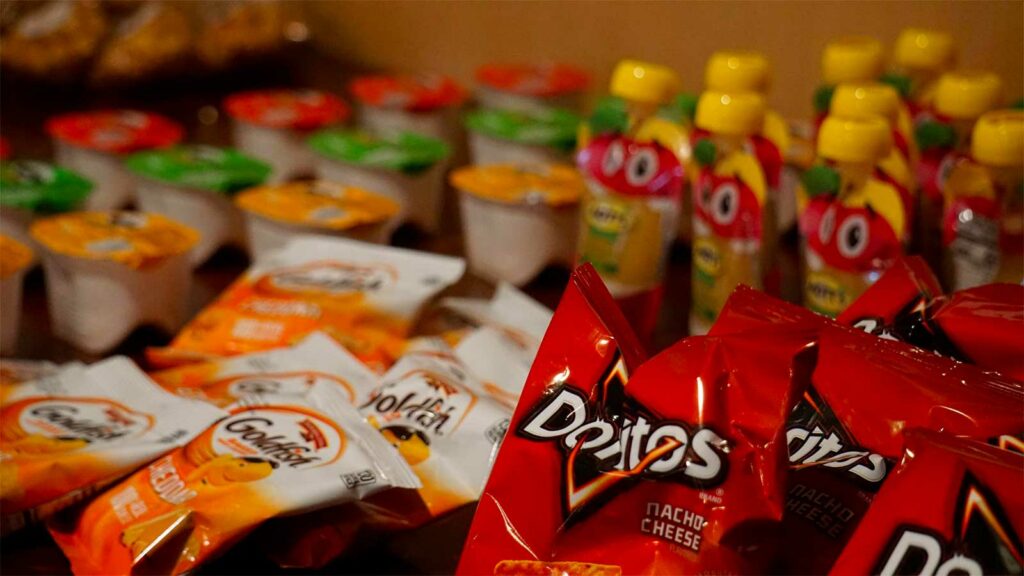
In many modern food environments, the default is oversized portions plus add-ons. Extra sides. Sweet drinks. Refills. Large snack packs on the sofa. When those habits are daily, it becomes very hard to stay stable without constant self-control.
The French meal structure supports portion control by design. You start with something light. You then eat a composed plate. You are not in “grazing mode.” You are in “meal mode.” That reduces the chance of eating the same calories in scattered pieces across the evening.
It also reduces daily exposure to ultra-processed foods. Not because France has none, but because a composed dinner pushes people toward a dish rather than random packaged items. When your meal is “a plate,” you are less likely to build dinner from snacks.
The dessert as a closing signal that reduces extra eating moments
The dessert has a behavioural job. It closes the meal. That closure is a tool.
When there is no clear ending, eating becomes a long sequence. A handful of chips at 20:30. A cookie at 21:15. A “small bowl” at 22:30. Each step feels minor. The sum is not minor.
Dessert in France can be fruit, yogurt, or a small pastry. Sometimes it is richer. The point is not to pretend dessert is always light. The point is that dessert ends the meal and makes “more food after” feel unnecessary rather than forbidden.
That is why the structure can feel strict without being strict. It is not “never eat.” It is “eat, then stop.”
The mechanisms that cut late-night takeout without moralising
Late-night takeout is rarely about hunger alone. It is fatigue, stress, boredom, or a reward after a long day. The French structure reduces these triggers through routine, predictability, and closure.
The dinner that is early enough and complete enough
A too-light dinner invites later cravings. Build a dinner that holds you. Aim for protein plus fibre plus satisfying texture. If dinner feels like punishment, you will compensate later.
The kitchen that “closes” after the meal
Create a clear boundary after dessert. The meal is finished. The kitchen is closed. Not as a moral rule, but as a habit. Herbal tea can become the new ritual.
The friction that makes ordering harder
Make ordering slightly inconvenient. Remove delivery apps from the home screen. Log out. Keep payment details off the phone. You want a pause long enough to reconsider.
The five-minute plan B that beats temptation
Keep simple options at home. Eggs. Frozen vegetables. Canned fish. Soup. Plain yogurt. Fruit. When you are exhausted, you need a solution that takes 5–10 minutes, not a perfect recipe.
The sleep factor people ignore
Sleep debt increases cravings and lowers restraint. If you “need” food at 23:00, ask a blunt question. Are you hungry, or are you tired? Many people confuse the two.
This is where the French approach is useful. It reduces decision fatigue. If dinner has a predictable shape, you negotiate less with yourself at night.
The obesity gap between France, the UK, and the US in real numbers
France is not a nutrition utopia. Overweight exists. Obesity has increased over time. Still, international comparisons consistently show France below the UK and the US on adult obesity.
In OECD “Health at a Glance 2025” country notes, self-reported adult obesity is reported at 14% in France, 29% in the United Kingdom, and 35% in the United States.
You must understand the caveat. “Self-reported” data can underestimate reality because many people under-report weight or over-report height. This is why measured surveys matter.
In the US, measured data from the National Health and Nutrition Examination Survey (NHANES) show adult obesity prevalence of 40.3% during August 2021–August 2023.
So which number is “true”? Both are informative, but they are not the same measure. Self-reported figures are useful for cross-country comparison within the same method. Measured surveys are stronger for estimating the real level inside one country. Either way, the ranking is clear in most datasets: the US is highest, the UK is high, and France is lower.
A second nuance matters. A 2025 France health profile notes that adult obesity in France rose from about 13% in 2010 to about 15% in 2022, reaching around the EU average.
So the French advantage is not guaranteed. It is under pressure from the same forces seen elsewhere: more snacks, more delivery, more sedentary time, and more ultra-processed options.
The limits of copying “French eating” without the real structure
Many people try to “eat like the French” and fail for predictable reasons.
They keep the three courses but add them on top of snacks. Then they simply eat more often.
They turn the starter into a high-calorie appetiser. Then the brake becomes an accelerator.
They keep dessert but make it a large, very sweet portion every night. Then it stops being a closing signal.
They eat the meal with screens and distractions. Then they eat faster and notice less.
They treat the rule as punishment. Then rebound eating appears.
The French model works when it reduces eating frequency and restores boundaries. It does not work when it becomes an aesthetic performance.
The real lesson behind the No-Snack Rule
The honest takeaway is simple. Snacking is not “evil.” But frequent snacking is risky in a modern food environment. When cheap calories are everywhere, more eating moments usually means more total intake, even if each moment is small.
The French meal structure is an old answer to a new problem. It limits how many times per day you eat. It gives meals a clear start and end. It reduces opportunities for mindless surplus.
If you want a single practical rule, make it this: treat eating as an event, not background noise. Eat a real meal. Close it. Then move on to something else.
Cook in France is your independant source for food in France.