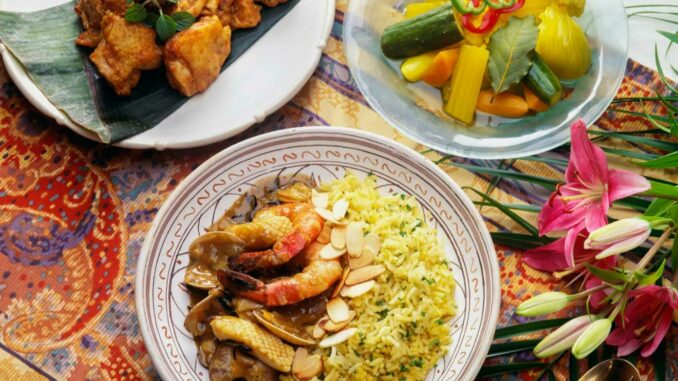
A practical guide to Nabeul and Cap Bon: harissa’s roots, UNESCO recognition, floral waters, markets, where to eat and stay, and how to plan a food-first trip.
The city where chillies hang like street decorations
In Nabeul, a coastal city on Tunisia’s northeastern shore, the day has its own soundtrack: car horns, bargaining voices, and the steady rhythm of medina life. Walk through the centre and you notice the same detail again and again—strings of red chillies drying in the sun, draped across doorways like festive garlands. They are not there for show. They are the raw material for Tunisian harissa, the punchy chilli paste that anchors countless Tunisian meals.
In Britain and across Europe, harissa has become shorthand for “North African heat”: a brick-red blend of chillies, garlic, salt and spices. But the travel question is more interesting than the pantry question. Where does the culture of harissa actually live? For many Tunisians, the answer is Cap Bon—especially Nabeul, often described locally as a capital of harissa-making, with a long-standing festival culture and family production traditions.
This is a food story, but it is also a place story. Cap Bon rewards travellers who want to understand how a region feeds a country—through farming, crafts, markets, and everyday technique.
The peninsula that concentrates Tunisia’s flavours
The Cap Bon peninsula juts into the Mediterranean in far northeastern Tunisia, within the Nabeul Governorate. Its coastline draws beach tourism toward Hammamet and the quieter edges near Kelibia, while inland roads quickly move into orchards, vegetable fields and small farms. If you’re building a trip around food, Cap Bon’s geography does part of the work for you: short distances, distinct micro-areas, and a strong local habit of turning agricultural abundance into staples.
Nabeul sits at the centre of that system. It is widely known for ceramics and weaving—crafts shaped by layers of history and local know-how. Yet its culinary reputation is just as meaningful on the ground, even if it is less marketed to international visitors. The fastest way to see that is the market: spices, peppers, preserved goods, breads, and the daily logic of what will be cooked tonight.
The paste that became a national marker
Harissa is easy to describe and hard to reduce to a single definition. At its core, it is crushed chilli—often combined with garlic, salt, and spices whose exact mix changes by household and region. But what makes it culturally important is not the ingredient list; it is the social practice: drying peppers, grinding, sharing, adjusting, and using it as a base flavour rather than a finishing gimmick.
That is one reason UNESCO Intangible Cultural Heritage recognition matters. In 2022, UNESCO inscribed “Harissa, knowledge, skills and culinary and social practices” on its Representative List, explicitly framing harissa as a set of know-how and community habits—not merely a product for export shelves.
The practical point visitors should know about “real” harissa
If you only ever bought harissa in tubes or tins, you have met the industrial version: convenient, stable, and consistent. In Cap Bon, many locals will tell you the “real” harissa is seasonal and freshly made from dried peppers—produced in small batches and used as a living condiment.
For travellers, this changes what you should look for. The best harissa experience is not buying a random jar. It is tasting it in context—on bread with olive oil, folded into stews, or used as a quiet backbone in fish dishes.
Where to taste harissa without turning it into a tourist performance
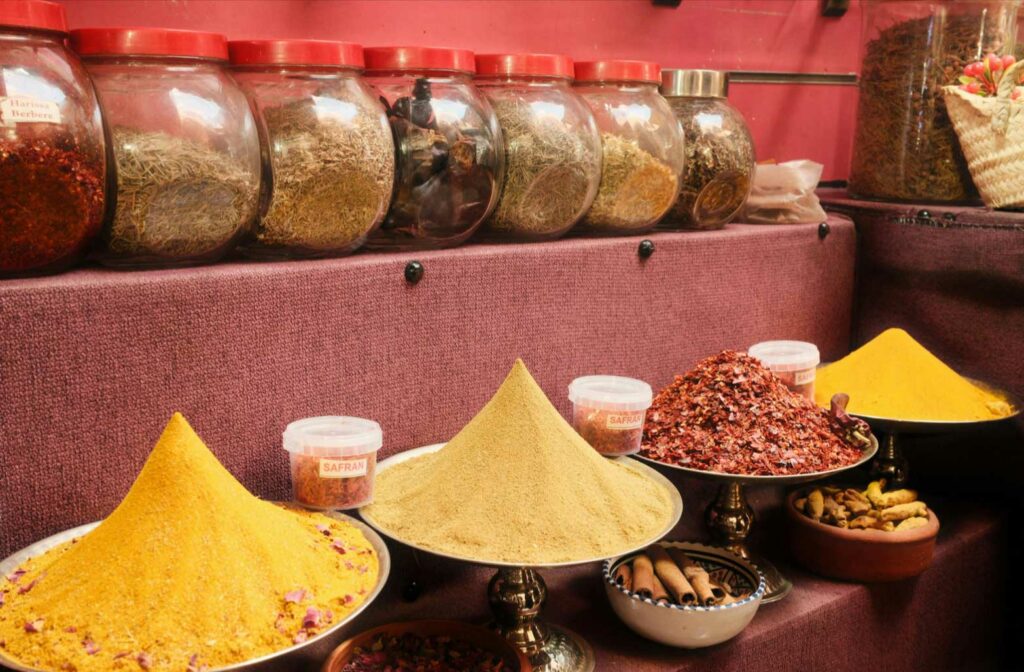
Start at the Nabeul market. Go early, when vendors are still setting out produce and spice piles look like freshly poured pigments. Taste first, shop later. If you want something practical to bring home, choose harissa that lists simple ingredients and has a vivid chilli aroma rather than a sour, overly acidic smell.
Then move to a small local restaurant that treats harissa as a tool, not a headline. A brik—thin pastry typically stuffed and fried—can be a perfect test dish. It is simple, so the harissa has nowhere to hide. When it is good, it doesn’t just “burn”; it adds warmth, smoke, and a peppery depth that makes the filling taste more complete.
If you are serious about technique, book a harissa-making workshop. The value is not only learning to grind chillies. It is learning how Tunisians talk about heat: which peppers they prefer, how they balance garlic and spice, how long they dry, and why some families insist on sun-drying instead of faster methods. Expect a sensory education, not a theatrical cooking class.
The other signature of Nabeul: fragrant waters you can actually use
Harissa may be the headline, but Nabeul has another deep specialty: orange blossom water and other aromatic waters distilled from flowers. International travellers often treat floral waters as pastry extras. In Tunisia, they are part of daily life—used in drinks, desserts, jams and traditional sweets, and sometimes in small medicinal or cosmetic routines.
The technique is straightforward and time-consuming. Flowers are picked fresh—often in spring—and loaded into a still with water. Heat creates steam; steam passes through a cooling pipe and condenses into floral water. Reporting from Tunisia often notes how labour-intensive the process remains at household level in Nabeul, where seasonal distillation is still a family ritual.
Here is the practical travel tip: do not buy floral water in the first shop you see. Smell matters. A good orange blossom water should smell clean, bright and natural—floral without smelling like perfume. If it smells synthetic, walk away. Ask how it was made and whether it is seasonal. The best producers will answer calmly and specifically.
Why Cap Bon tastes “complete”: farms, climate, and proximity
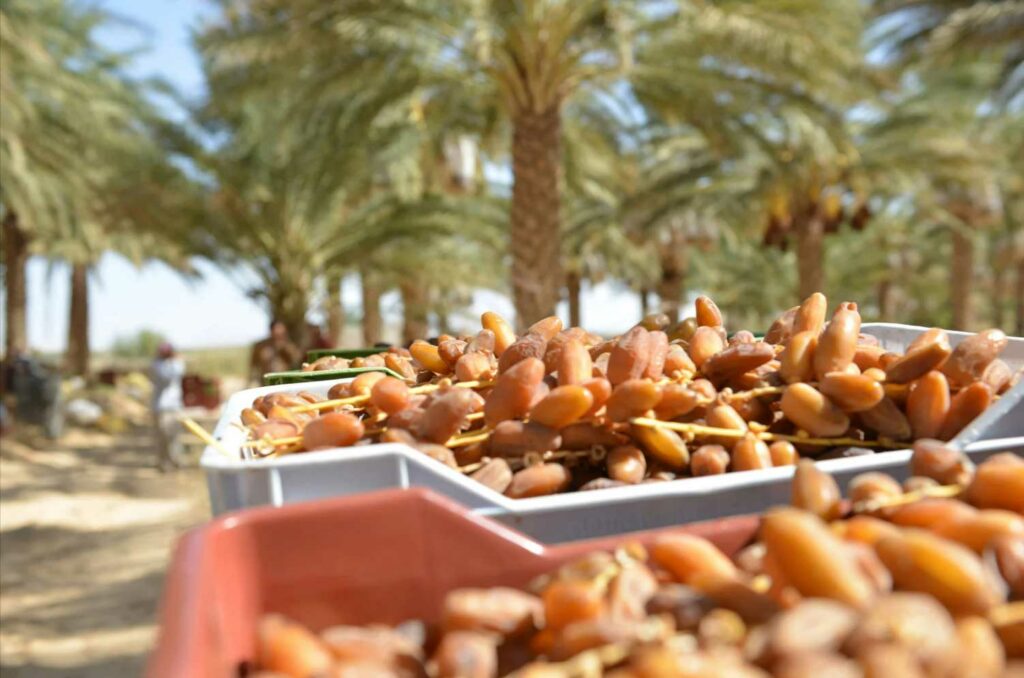
Cap Bon’s inland landscape explains a lot of the region’s culinary density. Drive 20–40 minutes from the coast and you’re in productive countryside: citrus groves, vegetables, vines. Several travel and journalism sources describe Cap Bon as unusually fertile and agriculturally rich within Tunisia, helped by a mild coastal climate and accessible farming areas.
This abundance supports a food culture that feels confident. In many places, staple dishes exist because they stretch ingredients. In Cap Bon, staple dishes also exist because the ingredients are there, in volume, with seasonal peaks that people still follow.
Food that is cooked for locals, not staged for visitors
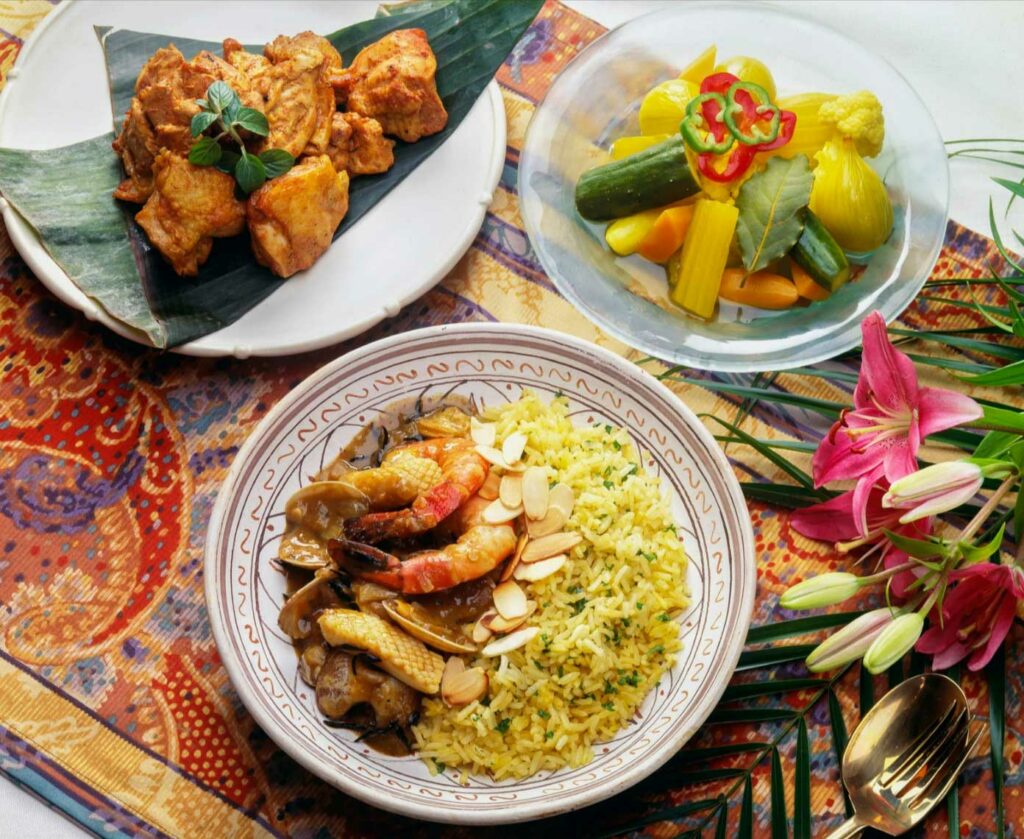
A useful way to “read” a destination is to see what locals eat when nobody is watching. In Cap Bon, you’ll repeatedly run into the same core set—each one with dozens of micro-variations:
- brik pastries, often tuna-based, sometimes egg-rich, sometimes more herb-driven
- ojja, a spicy tomato-and-pepper stew that can include merguez or seafood
- shakshuka-style egg dishes, adjusted by season
- slata mechouia, the smoky salad that tastes like summer even in cooler months
- tabouna bread, thick and crusty, built for dipping and scooping
In practice, these dishes are your map. Order them in different towns—Nabeul, Hammamet, Kelibia—and you’ll understand the region faster than any museum visit could teach you. That is not romanticism; it’s a method.
A simple three-day itinerary that keeps the pace realistic
The first day in Nabeul for markets, ceramics, and harissa in context
Morning: market and spices.
Midday: lunch built around local staples, plus bread and olive oil.
Afternoon: ceramics workshops and craft streets, then a tasting stop for harissa and preserved goods.
Evening: a second meal that repeats one dish on purpose—brik or ojja—so you can compare.
The second day for floral waters and rural Cap Bon
Morning: visit a small producer of floral water, ask about distillation, taste a jam or pastry where the water is used correctly.
Midday: farm or countryside stop for produce and simple cooking.
Afternoon: slow return to the coast, with a seafood dinner where harissa appears subtly rather than aggressively.
The third day for Kelibia and a sea-facing meal
Kelibia is where the peninsula’s seafood identity comes forward. Choose one memorable meal near the water, then keep the rest of the day light.
Where to stay, depending on your trip style
This part is simple: choose accommodation based on what you need to recover from—noise, heat, or driving.
- If you want calm inside the medina, pick a restored “dar” with a courtyard. You’ll be close to markets and craft streets and still sleep well.
- If you want a higher-end coastal reset, Hammamet gives you resort-level service within easy reach of Nabeul.
- If you want rural quiet, a countryside guesthouse in Cap Bon makes the peninsula feel slower and more intimate.
Think of where to stay in Nabeul as a strategy choice, not just a price choice. The wrong location can turn short distances into logistical friction.
What to bring home that still makes sense a month later
A good food trip should produce useful souvenirs. In Cap Bon, the best ones are practical:
- a small jar of harissa from a producer you met, not a random supermarket pick
- citrus products or preserves where acidity and aroma are the point
- orange blossom water you actually like the smell of, and will use in tea or baking
- spices you can identify and cook with, not decorative “souvenir blends”
The point is not to buy more. The point is to buy things that will still taste like the trip when you open them at home.
Cook in France is your independant source for food in France.