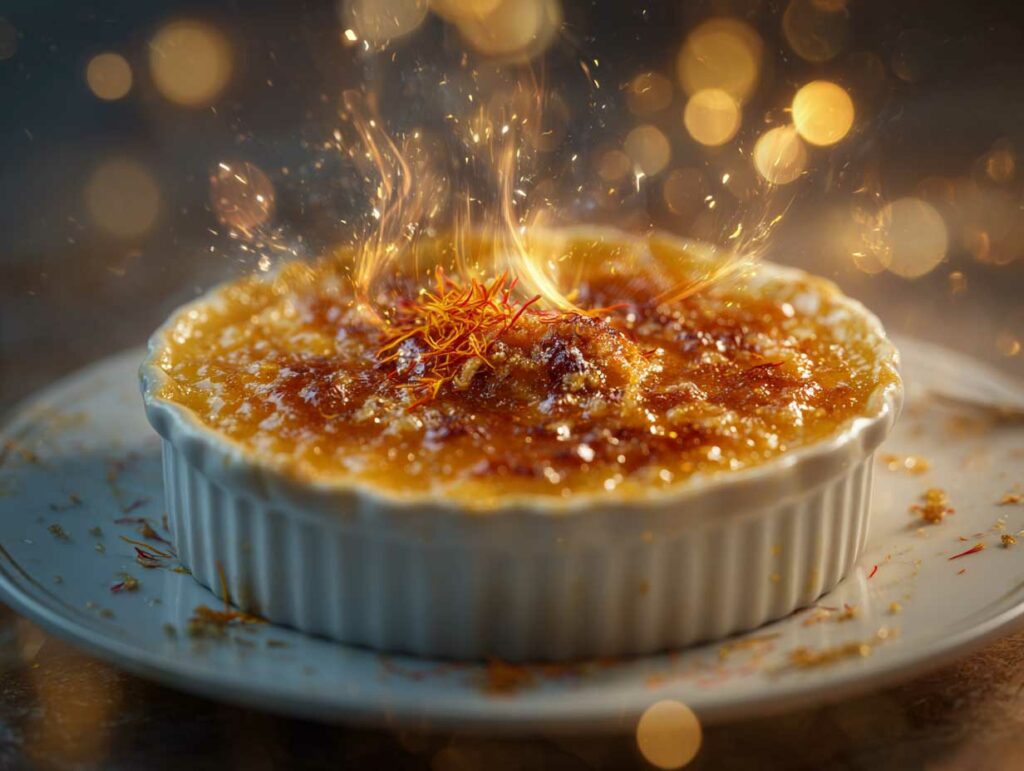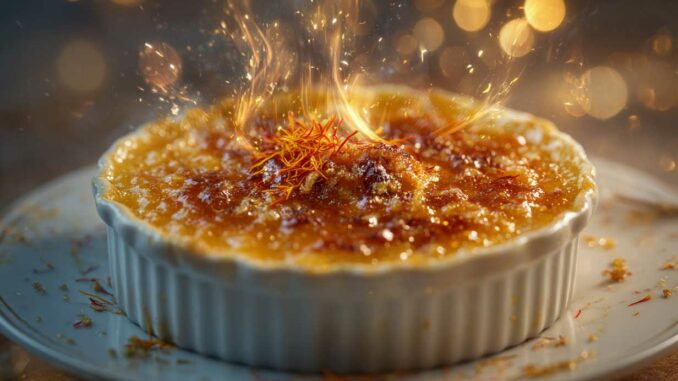
From saffron crème brûlée to butter chicken kulcha, India is blending bold spices with French techniques in a viral “Masala-Meringue” fusion trend.
A new wave of Indo-French fusion is reshaping food blogs, restaurant menus and home cooking trends across India. Social media searches reveal rising interest in recipes such as Butter Chicken Kulcha with Fenugreek Infusion, Saffron-infused Crème Brûlée, and even Miso-Butter Ratatouille. The trend combines bold Indian spices with classical French culinary techniques. It reflects India’s expanding middle class, digital food culture and global culinary curiosity. At the same time, it reveals France’s enduring symbolic power as a benchmark of technique and refinement. The “Masala-Meringue” moment is not random experimentation. It signals a deeper meeting of two culinary systems: one built on layered spices, the other on structured sauces and precision. The result is hybrid cuisine that speaks to modern India’s confidence and France’s adaptability.
The Digital Rise of Indo-French Fusion
The blending of Indian flavors with French technique has moved from fine dining into mainstream conversation. Food search data and recipe platforms show rising interest in Indo-French combinations, particularly around festive seasons.
Search phrases such as “French desserts with Indian twist” and “French classics vegetarian” have grown noticeably during Valentine’s Day and holiday periods. Social media platforms amplify visually appealing dishes that mix spice and elegance.
India’s digital food ecosystem is vast. Over 750 million internet users consume short-form cooking videos and recipe content. When a dish trends, replication is rapid.
The Masala-Meringue trend fits perfectly into this system. It combines visual drama, technical storytelling and cultural pride.
The Butter Chicken Kulcha with Fenugreek Infusion
Butter chicken is already a global icon. Pairing it with French technique elevates it further.
The dish known as Butter Chicken Kulcha with Fenugreek Infusion emerged in Parisian fusion restaurants before circulating online. Restaurants like Seeklo in Paris experiment with layering clarified butter sauces using French reduction methods while retaining North Indian spice bases.
The technical shift matters. Traditional butter chicken sauce relies on tomato purée and cream. In fusion kitchens, chefs clarify butter, infuse dried fenugreek (kasuri methi), and reduce the sauce to intensify flavor.
Kulcha, typically baked in a tandoor, is sometimes brushed with herb butter using French-style emulsification techniques. The result is less heavy and more structured on the palate.
Indian home cooks now search for this recipe to recreate restaurant-level finesse. It signals aspiration toward culinary precision without abandoning spice intensity.
The Saffron-Infused Crème Brûlée
Crème brûlée is a French classic built on cream, egg yolk and caramelized sugar. It is delicate and restrained.
India adds saffron.
Search interest for Saffron-infused Crème Brûlée spikes before romantic holidays. The dish appeals because saffron is already embedded in Indian desserts such as kheer and shrikhand.
Technically, saffron must be bloomed in warm cream at approximately 60°C (140°F) to release color and aroma. The custard is then baked in a bain-marie at 150°C (302°F) to maintain smooth texture.
The addition does not disrupt French structure. It deepens flavor and adds a golden hue that photographs well.
The appeal lies in familiarity. Indian palates recognize saffron. French technique provides refinement.
The Miso-Butter Ratatouille and the Umami Shift
Ratatouille is traditionally a Provençal vegetable stew. It is built on tomato, zucchini, eggplant and herbs.
The emergence of Miso-Butter Ratatouille reflects India’s expanding appetite for umami-rich vegetarian dishes. Miso, though Japanese, adds depth similar to fermented Indian ingredients.
The technique remains French. Vegetables are sliced evenly, sometimes arranged in confit style and baked at 160°C (320°F). Butter emulsified with white miso adds savory complexity.
Why does this matter? India has a large vegetarian population. French cuisine, often associated with meat and dairy, must adapt to remain relevant.
Searches for “French vegetarian recipes” have risen steadily in recent months. The miso-butter variation satisfies that demand without abandoning French structure.
The Meeting of Technique and Spice
French cuisine emphasizes method. Sauce reduction, emulsification and precise temperature control define its identity.
Indian cuisine emphasizes layering. Spices are toasted, ground and combined in sequences to build depth.
The Masala-Meringue movement merges these logics. It respects French structural discipline while preserving Indian boldness.
For example, meringue requires stable egg whites whipped to stiff peaks at controlled humidity. Indian chefs experiment with adding cardamom or rosewater while maintaining structural integrity.
This is not random mixing. It requires technical literacy in both traditions.
The Cultural Confidence Behind the Trend
India’s middle class is expanding. Urban consumers travel more frequently. Exposure to global cuisine is no longer limited to elite circles.
There is also a generational shift. Younger Indian cooks are less bound by culinary orthodoxy. They value experimentation.
At the same time, France remains a culinary reference point. French gastronomy is listed by UNESCO as intangible cultural heritage. That symbolic capital travels.
When Indian home cooks attempt crème brûlée, they engage with a global standard. When they add saffron, they assert identity.
The fusion expresses parity rather than imitation.
The Paris Connection and Reverse Influence
Paris has long hosted a strong Indian diaspora. Indian restaurants in Paris experiment with blending traditions to appeal to French diners.
Restaurants like Seeklo reinterpret Indian staples using French plating and wine pairing.
This cross-pollination moves both ways. Indian chefs trained in France return home with technical skills. French chefs experiment with Indian spices such as turmeric, asafoetida and garam masala.
The circulation of chefs and ideas accelerates the fusion.
The Social Media Acceleration
The Masala-Meringue trend thrives because it is visually compelling.
Saffron custard under caramelized sugar cracks cleanly on camera. Butter chicken presented in minimalist white bowls aligns with global plating standards.
Platforms reward novelty and aesthetics. A dish that blends French elegance with Indian vibrancy stands out.
Search spikes around Valentine’s Day illustrate this dynamic. Romantic dinners require symbolism. French desserts provide it.
The Economic Context of Fusion
India’s restaurant industry is projected to grow steadily in urban centers. Fusion cuisine allows differentiation in a competitive market.
French ingredients such as cream and butter are accessible. Imported wine consumption is increasing, particularly among urban professionals.
Fusion dishes balance cost and prestige. They use local spices while invoking French technique.
The price point remains manageable. A saffron crème brûlée in a mid-range Indian restaurant may cost ₹350–₹500 (€4–€6). It feels premium without being inaccessible.
The Meaning of Masala-Meringue
The blending of masala and meringue reveals something about both cultures.
For India, it signals culinary self-assurance. There is no hesitation in adapting French classics.
For France, it demonstrates adaptability. French technique travels because it is systematic.
The fusion is not superficial. It requires understanding of spice chemistry and sauce physics.
The Masala-Meringue moment shows that cuisine evolves through dialogue. When bold spices meet delicate custards, neither tradition disappears. They coexist.
In Indian kitchens today, saffron custard sets beside kulcha brushed with clarified butter. It is not a contradiction. It is a conversation on the plate.
Cook in France is your independant source for food in France.