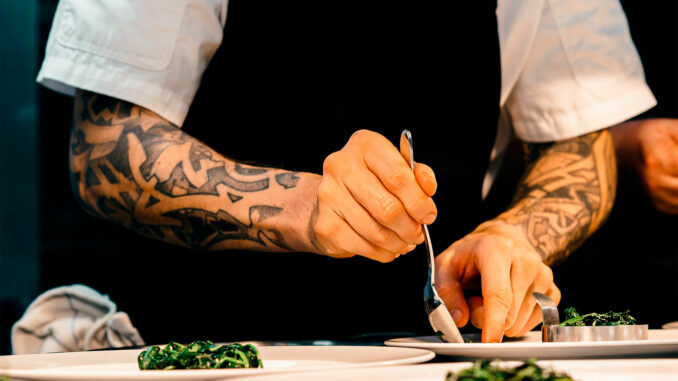
As chefs turn into media stars, chef’s agents become the trendiest job in French gastronomy, reshaping money, image and power in the business of fine dining.
In France, Michelin stars and television ratings now coexist on the same CV. As this happens, the rise of chef’s agents in France is changing how the country’s best-known cooks manage their careers. These agents operate like those in cinema or music. They negotiate television shows, books, brand endorsements, pop-up residencies and private events, sometimes worth hundreds of thousands of euros. Their clients are chefs who already run demanding kitchens and need help sorting through an avalanche of offers. The agents’ work illustrates the new talent managers of gastronomy and raises questions about the business of fine dining in France. Are chefs still artisans first, or have they become brands to be monetised across media and luxury partnerships? As more agencies open in Paris and other cities, the trendiest job in French gastronomy is forcing the industry to rethink power, visibility and value.
The media spotlight that created a new profession
Over the past twenty years, French gastronomy has been transformed by television, streaming platforms and social media. Flagship shows such as “Top Chef” or “Objectif Top Chef” can propel a previously unknown cook into national fame within one season. A single episode can attract more than three million viewers in France, and clips travel further on digital platforms.
At the same time, the Michelin Guide lists around 639 starred restaurants across the country, while city guides, rankings and awards multiply. A young chef can win a first star before the age of 35 and immediately face a wave of interview requests, brand proposals and invitation-only events. Managing this flow of attention is a job in itself.
This environment explains the growing spotlight on top chefs. They are no longer only judged by plates served each night, but also by follower counts, book sales and collaborations with champagne houses, watchmakers or hotel groups. Into this space comes the emergence of chef representation as a structured, professional service.
The role of a chef’s agent beyond simple bookings
Behind the scenes, the role of a chef’s agent is far broader than “finding work”. Agents act as career architects. They filter incoming requests, identify long-term opportunities and protect chefs from deals that do not match their values or schedule.
A typical workday can include negotiating a one-night dinner for 40 guests in a luxury hotel, structuring a three-month residency in the Middle East, or closing a multi-year contract with a kitchen equipment brand. Some collaborations can reach fees close to 1 million euros over several years for the most visible names. The agent analyzes the chef’s availability, the impact on his team, and the risks for his reputation.
They also manage press relations in coordination with communication agencies, organise photo shoots, oversee cookbook contracts and monitor social media strategy. In many cases, they help chefs navigate complex legal and financial questions, from image rights to intellectual property around signature dishes. The chef remains the creative force, but the agent becomes the conductor of everything around the stove.
The talent-agency model imported into French cuisine
What is striking today is the talent-agency model in French cuisine. Agencies dedicated to culinary talents have appeared in Paris and other major cities. Some, like Ambrosios or Food & Talent, position themselves as high-end “culinary talent agencies”, connecting Michelin-starred chefs and pastry chefs with prestige brands, hospitality groups or cultural institutions. Others, such as La Relève or Take Away, emerge from backgrounds in advertising, journalism or event production and apply entertainment-industry methods to gastronomy.
These structures operate with rosters of 10 to 50 chefs, often including one or two media stars and a wider circle of emerging names. Contracts typically include a commission on deals, frequently between 15 and 25 %, depending on the service and the client profile. The goal is not only to fill chefs’ calendars, but to build coherent narratives: a chef focused on sustainability will seek different partners from one associated with nightlife and cocktails.
This is where the professionalisation of star chef careers is most visible. Career plans may be drawn over three to five years, combining a new restaurant opening, a television project, a book and a series of residencies abroad. Such planning resembles that of an actor or musician more than the traditional path of a French restaurateur.
The business of fine dining in France under pressure
Underneath the glamour, the business of fine dining in France is under economic strain. Rising energy costs, staff shortages and tighter margins make it hard for restaurants, even starred ones, to rely only on service revenue. External activities can represent a significant share of income. A chef who earns a few thousand euros for a single evening outside his restaurant can use that money to fund kitchen renovations, staff training or debt repayment.
Agents help systematise this diversification. They set fee grids, ensure that chefs are paid on time and insist on clear conditions: number of services, travel arrangements, intellectual property on recipes. For a two-star chef asked to design a menu for a luxury train or a department store food hall, the difference between an improvised handshake deal and a structured contract can be measured in tens of thousands of euros.
From the client side, brands and hotels appreciate having a professional intermediary who understands both creative constraints and corporate expectations. This reinforces the perception of chef’s agents as the new talent managers of gastronomy, fluent in both kitchen and boardroom.
The delicate balance between art, image and commerce
The growing importance of agents also fuels the debate over chef branding and management. Some observers worry that chefs risk becoming overexposed, turning into omnipresent faces for every campaign related to luxury, travel or kitchenware.
Agents themselves insist that their job is partly to say no. They refuse partnerships that would dilute a chef’s identity or overburden an already fragile brigade. For instance, a chef known for seasonal, local cooking may turn down an international frozen-food campaign. Another might decline a reality show that portrays kitchens as chaotic workplaces, in order to protect staff morale.
This protective function is central to the professionalisation of star chef careers. It recognises that a chef’s image is a long-term asset. A poorly chosen campaign can damage credibility in the eyes of critics and diners. A carefully selected collaboration, by contrast, can amplify a message – for example, by linking a chef known for sustainable sourcing with a brand investing in regenerative agriculture.
The everyday reality behind the “trendiest job” label
Headlines often present agents as people who simply “manage stars”. In reality, the trendiest job in French gastronomy involves a mixture of glamour and administrative grind. Agents spend long hours on trains between Paris, Lyon and Marseille, juggling spreadsheets, contracts and last-minute changes. Income can be irregular, especially when working with young chefs whose visibility is still fragile.
Many agents come from careers in law, communications or journalism, which helps in dealing with complex contracts and media negotiations. Yet they also need emotional intelligence. Chefs operate under intense pressure, with services that can last 12–14 hours, six days per week. Planning a photo shoot or brand event means understanding when the kitchen can cope and when it cannot.
This is why the rise of chef’s agents in France is closely linked to burnout prevention and workload management. By transferring some of the negotiation burden to professionals, chefs regain time and mental space for creative work and team leadership, at least in theory.
The future of chef representation in a changing industry
Looking ahead, the emergence of chef representation is likely to continue, but not all players will survive. The field is crowded, and some agencies will specialise: television formats, luxury hotel collaborations, international residencies or digital content creation. Others may integrate broader services, from restaurant concept consulting to full-scale communication strategy.
As diners become more attentive to sustainability, social responsibility and staff conditions, agents will also have to integrate these themes into their advice. A partnership with a controversial sponsor or a project that strains a team already short of staff can quickly damage a chef’s image. Agents who understand these new sensitivities will have an advantage.
More broadly, the talent-agency model in French cuisine raises questions about what success means for a chef. Is it measured in stars, followers, revenue from endorsements, or the stability of a restaurant team over time? Agents sit at the crossroads of these metrics. Their decisions will help shape how future generations of cooks imagine their careers, and whether fame remains a by-product of great food or becomes a central ingredient in the recipe.
Cook in France is your independant source for food in France.