Learn the best food and wine pairings with clear rules, classic and modern matches, serving temperatures, glassware tips, and common mistakes to avoid.
Food and wine pairing is not about rigid rules or showing off vocabulary. It’s about balance: the dish should make the wine taste better, and the wine should make the dish taste better. In oenology, a successful match comes from understanding flavour intensity, texture, acidity, sweetness, salt, bitterness, and how tannins behave with protein and fat.
Done well, pairing turns a simple meal into a memorable wine tasting. Done poorly, it can flatten aromas, exaggerate bitterness, or make a wine feel harsh and alcoholic. The good news: you don’t need to be a sommelier. With a few reliable principles—and a couple of “always works” combinations—you can improve almost every pairing you do at home. (Core pairing concepts like balancing components and choosing match vs contrast are widely explained in introductory pairing guides.)
This guide gives you practical rules, classic examples, modern ideas, and hosting tips (order of service, serving temperature, and glassware), so you can build a coherent pairing from starter to dessert.
What is a “successful” pairing?
A food and wine pairing is successful when neither element dominates. You want harmony: aromas align, textures make sense together, and the finish feels clean rather than heavy or sour.
Think in three layers:
- Weight (body): light with light, rich with rich
- Structure: acidity, tannins, sweetness, salt, bitterness
- Aromas: complementary (echoing flavours) or contrasting (balancing opposites)
Three rules that solve most pairings
1) Match intensity (don’t let one overwhelm the other)
A delicate dish (steamed fish, raw seafood, fresh vegetables) needs a wine with finesse and freshness. A slow-cooked stew, grilled red meat, or a reduced sauce can handle a fuller-bodied red.
2) Use acidity as your “reset button”
Acid is the most useful tool in pairing. High-acid wines cut through fat, cream, and fried textures, and they keep the palate alert. That’s why crisp whites work so well with seafood and why many rich dishes “need” brightness in the glass.
3) Decide: complement or contrast
- Complementary pairing: earthy wine with mushrooms; buttery wine with creamy sauce
- Contrasting pairing: sweet wine with salty cheese; crisp wine with fatty food
How taste components change the wine
Understanding four taste levers makes pairing much easier:
Acidity
Acid in food can make a wine seem softer, and acid in wine can balance richness. Lemon sauces, vinaigrettes, and tomatoes often call for a lively wine style rather than something round and oaky.
Bitterness
Bitterness in food can amplify bitterness in wine. If a dish features endives, artichokes, kale, or charred greens, avoid highly tannic reds. Prefer lighter reds or aromatic whites.
Salt
Salt can soften tannins and reduce the perception of acidity, which is why salty cured meats and seafood are often surprisingly flexible. (Many pairing resources note salt’s “smoothing” effect.)
Sweetness
Sweet dishes make dry wines taste more acidic and sometimes harsh. Dessert is the clearest rule: the wine should be at least as sweet as the dessert.
Key terms to remember: tannins, acidity, sweetness, umami, body, minerality, aromatic intensity, oak influence, food and wine pairing, serving temperature.
The dish matters more than the protein: cooking method and sauce
A common mistake is pairing “wine with chicken” or “wine with fish.” In reality, the sauce and the cooking method often matter more than the main ingredient.
Cooking methods
- Grilled: smoky, Maillard notes → structured reds or fuller whites
- Roasted: concentrated flavours → balanced reds, textured whites
- Steamed: delicate → crisp whites, light-bodied styles
- Raw (tartare, carpaccio): freshness + acidity → bright whites or light reds
Sauce and sides: the real pairing driver
- Lemon/citrus sauces: go for crisp whites (high acidity)
- Cream sauces: choose wines with enough acidity to lift the richness (often Chardonnay styles work well, but avoid over-oaked bottles if the dish is delicate)
- Red wine reductions / game sauces: structured reds with depth
Classic pairings that rarely fail
These combinations are classics for a reason: they align structure and aroma without forcing anything.
Oysters + Muscadet
Oysters bring iodine, brine, and a clean, salty finish. A dry Muscadet-style wine works because it’s crisp, light, and mineral, echoing the sea without adding heaviness. Many oyster pairing guides cite Muscadet (alongside Chablis and Champagne) as a benchmark match.
Duck breast + Pinot Noir
Duck has richness and gentle sweetness, often with a sauce that can include fruit or reduction. Pinot Noir’s natural acidity and red-fruit aromatics keep the pairing agile and avoid the heavy tannins that can clash with duck’s texture.
Blue cheese (Roquefort-style) + sweet white wine
Salty, intense blue cheese becomes more balanced with a sweet wine (Sauternes-type styles are famous here). This is a textbook “contrast” pairing: sweetness offsets salt and intensity.
Modern pairings that work surprisingly well
Sushi + Riesling
Sushi is delicate but often includes soy sauce, wasabi, and fatty fish. A dry Riesling brings precision, citrus notes, and strong acidity, cutting through fat while staying light on the palate.
Lamb tajine + Languedoc red blend
Tajine combines slow-cooked meat, spices, and sometimes dried fruits. A southern French red blend (often built around Syrah/Grenache/Mourvèdre) can match the dish’s aromatic complexity and warmth without feeling thin.
Dark chocolate + Vin Doux Naturel (or Vintage Port)
Dark chocolate brings bitterness, intensity, and cocoa depth. Fortified or naturally sweet wines handle this well because they match sweetness level and echo oxidative, nutty, or dried-fruit notes that sit naturally with cacao. Pairing guides often recommend Port, Banyuls, Maury, and similar styles with chocolate desserts.
How to organise a wine tasting at home
1) Build a logical serving order
A simple structure protects your palate:
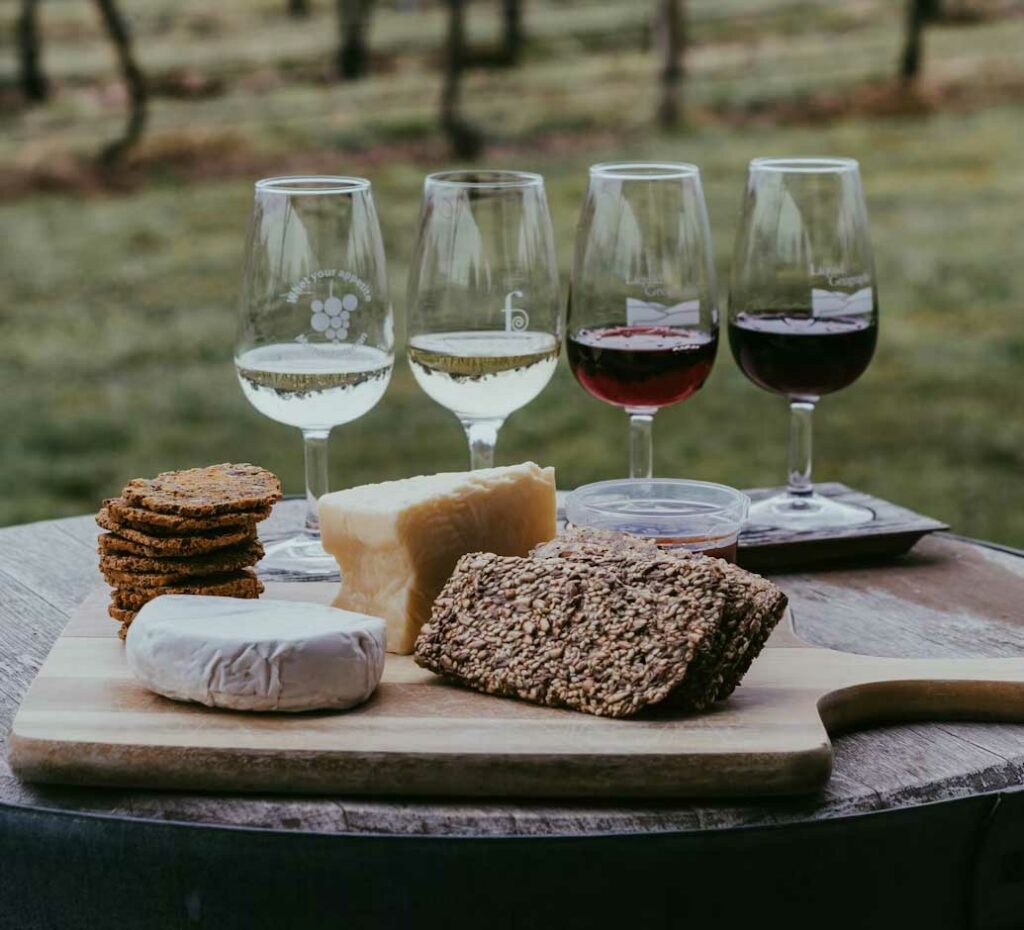
- lighter to fuller-bodied
- dry before sweet
- younger before older (in general)
This progression is standard in tasting practice because it reduces palate fatigue and keeps aromas readable.
2) Get the serving temperatures right
Temperature changes aroma, texture, and alcohol perception. General ranges in Celsius:
- light dry whites: 8–10°C
- fuller whites / lightly oaked: 12–14°C
- light reds: 14–16°C
- structured reds: 16–18°C
- sparkling wines: 6–10°C
- dessert wines: 10–12°C Tip: wine warms quickly in the glass. Serve slightly cooler than your target.
3) Use appropriate glassware (or a smart compromise)
If you own multiple glasses, use them. If not, a good “universal” tulip glass works for most wines and is better than mismatched shapes.
- big bowl for bold reds (helps oxygenation)
- narrower tulip for aromatic whites (directs aromas)
- flute or tulip for sparkling (preserves bubbles)
Common mistakes to avoid
Starting too powerful
Beginning the meal with high-alcohol reds or sweet wines can saturate the palate. Save dessert wines for dessert or blue cheese, not the aperitif.
Acid mismatch
A very acidic dish with a soft, low-acid wine can make the wine feel flat. If the dish has lemon, vinegar, or sharp citrus, choose a wine with enough acidity to keep up.
Wrong temperature
Reds served too warm can feel alcoholic; whites served too cold lose aroma. Temperature guidelines exist for a reason—follow them as a baseline.
Seasonal pairing ideas (easy to remember)
Spring: asparagus + Sauvignon Blanc
Asparagus can be tricky because of its vegetal and slightly bitter profile. Sauvignon Blanc often works thanks to herbal notes and bright acidity—serve around 8–10°C.
Summer: grilled food + Provence rosé
Summer grill flavours pair well with rosé because it brings freshness and fruit without tannic weight. It’s also versatile across vegetables, fish, and white meats.
Autumn: mushrooms + Jura Vin Jaune
Mushrooms love wines with earthy, nutty, forest-floor notes. Vin Jaune (Savagnin-based) naturally echoes those flavours and can handle creamy sauces and poultry too.
Winter: slow-cooked dishes + Syrah
Braised meats and stews need structure, warmth, and spice. Syrah often matches winter flavours—pepper, dark fruit, and savoury depth—especially when the dish includes reduction, herbs, and long cooking.
Cook in France is your independant source for food in France.