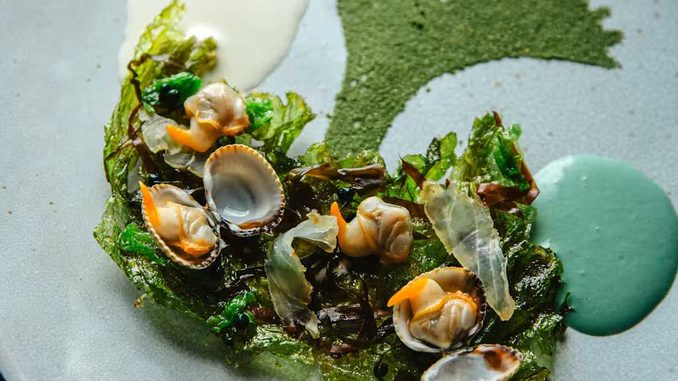
French dining embraces real food, fermentation and gut health in 2026. Discover the chefs, dishes and science behind this growing culinary movement.
French gastronomy is experiencing a renewed interest in real food, natural fermentation and gut health. According to Le Cordon Bleu’s 2026 food trends report, restaurants are moving towards simpler dishes, shorter menus and ingredients that undergo less industrial processing. At the same time, fermented foods, whole grains, pulses and fibre-rich vegetables are attracting growing attention.
In France, chefs such as Nicolas Conraux at La Butte, Stéphane Enault at Les Roseaux Pensants and Hugo Chaise at My Fermentation are exploring traditional fermentation techniques through inventive contemporary cooking.
The movement has a nutritional dimension. The World Health Organization recommends at least 25 g of dietary fibre daily for people over ten, while research continues to investigate how fermented foods affect the intestinal microbiome.
However, not every fermented product is a proven probiotic, and simple food is not automatically healthy. The lasting significance of this movement lies in its potential to reconnect restaurant cooking with ingredients, craftsmanship and nutritional quality.
The return to real food marks a change in restaurant priorities
French restaurants are reconsidering what makes a dish attractive. Elaborate presentations, lengthy tasting menus and complex ingredient combinations are no longer the only expressions of culinary ambition.
In its 2026 food trends report, Le Cordon Bleu identifies a growing interest in minimally processed, recognisable foods prepared with professional precision.
The examples are deliberately ordinary: steak, pasta, pizza and lasagne.
The underlying principle is straightforward. A restaurant that specialises in a limited number of well-executed dishes can control purchasing, reduce waste and maintain consistency.
Fresh pasta made daily from flour and eggs, a carefully sourced steak cooked over charcoal or a naturally fermented sourdough loaf can demonstrate considerable technical expertise.
The emphasis shifts from the number of ingredients to their quality and preparation.
This is not evidence that all French restaurants have abandoned elaborate gastronomy. Le Cordon Bleu’s report is a qualitative forecast rather than a representative statistical survey of French diners.
Nevertheless, the movement reflects a broader reconsideration of industrially processed food.
According to French national health insurance information published in March 2026, ultra-processed foods account for approximately 35% of the French diet.
The renewed interest in traditional French food and culinary traditions therefore extends beyond restaurant fashion.
The gut-health movement gives traditional ingredients a new purpose
The second major development concerns the intestinal microbiome.
This complex ecosystem comprises bacteria, archaea, fungi and viruses living throughout the digestive tract.
These microorganisms participate in the transformation of dietary components, particularly fibres that human digestive enzymes cannot fully break down.
Their activity produces metabolites, including short-chain fatty acids such as acetate, propionate and butyrate.
Butyrate is particularly important because it provides energy to cells lining the colon.
The dietary fibre becomes a central ingredient
The World Health Organization recommends at least 25 g of dietary fibre per day for individuals over ten years old.
France’s food safety agency, ANSES, recommends 30 g daily for adults.
Legumes provide a practical way to increase intake. According to French Ciqual nutritional data, 100 g of cooked lentils contains approximately 8.5 g of fibre.
This explains the growing appeal of dishes featuring lentilles vertes du Puy, haricots blancs, chickpeas and whole grains.
A salad combining 150 g of cooked lentils with seasonal vegetables, walnuts and mustard vinaigrette offers substantially more fibre than a conventional meat-and-potatoes plate.
Such dishes are not new inventions. They reinterpret ingredients already established in French regional cooking.
The fermented foods introduce new flavours and culinary techniques
Fermentation uses microorganisms to transform carbohydrates and other food components into acids, alcohols and aromatic compounds.
Lactic acid bacteria, for example, convert available sugars into lactic acid. This lowers pH, creates acidity and can help preserve food.
Yeasts participate in alcoholic fermentations and bread-making, while fungi such as Aspergillus oryzae are central to the production of koji, miso and other Asian fermented products.
French restaurants increasingly incorporate these techniques into sauces, condiments, vegetables and drinks.
Examples include lacto-fermented carrots, buckwheat miso, fermented tomato water, artisanal kefir and kombucha.
According to figures from trend agency NellyRodi reported in June 2026, French Google searches for kombucha reached an estimated 1.8 million, up 64% year on year. Kefir attracted approximately 1.5 million searches, an increase of 38%.
These figures demonstrate online interest, not confirmed restaurant sales.
The nutritional benefits require scientific precision
Fermented food is not necessarily probiotic food.
Probiotics are live microorganisms that have demonstrated health benefits when consumed in adequate quantities.
Fermented foods may contain living microorganisms without meeting that scientific definition.
Baking also destroys the living cultures in sourdough bread. Pasteurisation can have a similar effect on fermented drinks.
A Stanford University clinical trial published in Cell in 2021 examined 36 healthy adults assigned to high-fibre or fermented-food diets.
Over the study period, the fermented-food group experienced increased microbial diversity and reductions in several inflammatory markers.
The findings are promising but come from a relatively small study. They do not establish that individual fermented products prevent or treat digestive diseases.
The French chefs turning fermentation into gastronomy
The Nicolas Conraux approach at La Butte
At La Butte in Plouider, Brittany, chef Nicolas Conraux has integrated fermentation into his cooking since 2019.
According to a May 2026 report in L’Hôtellerie Restauration, 60–70% of his preparations involve fermentation.
Two members of his kitchen team specialise in fermenting ingredients.
His dishes include lacto-fermented tomatoes with sea-water preparations and fermented wild garlic. He also produces miso from coco de Paimpol beans, using it to enrich vegetable and poultry sauces.
The resulting flavours provide acidity, salinity and umami without necessarily relying on large quantities of butter or cream.
Conraux also develops fermented beverages, including fruit kefirs, for food pairings.
The Stéphane Enault experiments at Les Roseaux Pensants
In Cormery, in the Loire Valley, Stéphane Enault uses locally sourced legumes and grains to prepare tempeh.
His compositions combine vegetable proteins, seasonal produce and fermented condiments.
One documented preparation features quinoa tempeh, young vegetables, fermented spruce shoots, vegetable pastrami and a carrot sauce sharpened with pine vinegar.
The technique creates several layers of acidity and savouriness.
Rather than reproducing Asian recipes unchanged, Enault adapts their fermentation methods to French regional ingredients.
The Hugo Chaise laboratory in Paris
Hugo Chaise, founder of My Fermentation in Paris, has developed a specialist approach to fermented products.
His preparations include a rolled omelette finished with miso butter, replacing conventional salt seasoning with a more complex fermented condiment.
He also produces seasonal kombuchas, with combinations such as parsley and kiwi or apple, celery and Sichuan pepper.
These drinks provide alternatives to conventional soft drinks and alcoholic pairings, although their sugar content and live cultures vary according to production methods.
The simpler restaurants are also returning to exceptional ingredients
The real-food movement is not confined to fermentation specialists.
At Le Doyenné in Saint-Vrain, near Paris, chefs James Henry and Shaun Kelly have developed an agricultural approach to restaurant cooking.
According to the Michelin Guide, their one-hectare vegetable garden supplies more than 90% of the fruit and vegetables used in the kitchen.
The garden contains approximately 130 vegetable varieties, alongside around 100 fruit trees.
This model places seasonal availability at the centre of menu development.
In Paris, Giovanni Passerini represents another expression of the movement through traditional Italian cooking.
His restaurant and adjoining Pastificio emphasise fresh pasta, carefully sourced ingredients and established preparations such as trippa alla romana.
Neither restaurant presents itself principally as a gut-health establishment. Their relevance is the priority given to raw ingredients, traceability and craftsmanship.
The new menus combine familiar cooking with fermented ingredients
A contemporary real-food menu does not necessarily require expensive or unfamiliar ingredients.
A representative bistro menu could begin with leeks vinaigrette accompanied by toasted sourdough bread and fermented mustard seeds.
The main course might feature grilled free-range chicken with lentilles vertes du Puy, roasted carrots and a reduction enriched with fermented bean miso.
Dessert could combine poached pears, natural yoghurt and toasted buckwheat.
A vegetarian alternative might offer chickpea and roasted cauliflower salad, followed by fresh pasta with mushrooms, fermented garlic and aged Comté.
These are illustrative menu combinations, not dishes attributed to a specific restaurant.
They demonstrate how traditional cooking can incorporate fibre-rich ingredients and fermentation without becoming a restrictive health-food concept.
For interested home cooks, fermentation and healthy cooking workshops in Paris provide practical instruction in preparing kefir, kimchi and lacto-fermented vegetables.
The long-term future depends on more than nutritional fashion
The enthusiasm surrounding gut health contains an unmistakable commercial element.
Restaurants and food brands have recognised the marketing appeal of expressions such as microbiome-friendly, living foods and natural fermentation.
Some claims are poorly defined. A fermented sauce served in a restaurant may provide an interesting flavour without delivering measurable probiotic benefits.
There are also operational difficulties.
Fermentation requires strict hygiene, temperature control, appropriate acidity and careful monitoring. Uncontrolled production can create food safety risks.
More importantly, the two trends do not always reinforce each other.
A steak served with fries may qualify as a simple, minimally processed meal, but it provides little dietary fibre. A fermented product may be high in salt or added sugar.
Ingredient quality and nutritional quality are separate questions.
Yet the movement has foundations that extend well beyond social media.
Fibre-rich foods, seasonal vegetables, whole grains and traditional fermentation techniques have long histories. They also respond to contemporary concerns about food processing, waste and ingredient transparency.
For restaurants, the opportunity lies in improving flavour and nutritional balance without compromising pleasure.
The evolution of French restaurant trends and gastronomy will reveal whether these principles become everyday kitchen practices or remain expensive features of specialist menus.
The most durable outcome would not be a restaurant industry selling increasingly elaborate claims about gut health. It would be a return to food whose ingredients, production methods and culinary purpose are clearly understood.