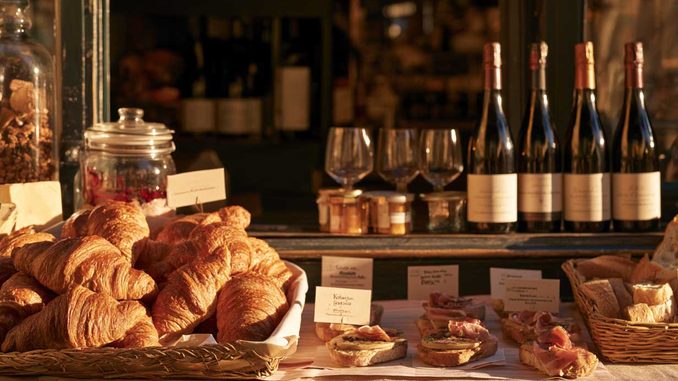
Discover the best Christmas markets and food fairs in Paris in 2026, from authentic Alsatian specialties to gourmet festivals and tourist hotspots.
Paris offers two very different Christmas market experiences. The first is built around festive entertainment, illuminated chalets and street food. The second focuses on regional producers, traditional recipes and the ingredients that French families buy for their Christmas meals.
For Christmas 2026, the Alsatian Christmas Market at Gare de l’Est is among the strongest choices for authentic regional food. The Salon Saveurs des Plaisirs Gourmands, bringing together approximately 250 exhibitors, offers a more substantial gourmet shopping experience. The smaller Notre-Dame market is particularly attractive for French craftsmanship and its historic setting.
The Tuileries and La Défense deliver impressive festive entertainment, but their commercial atmosphere is less distinctive.
Visitors seeking everyday Parisian food culture should also explore Marché d’Aligre, Marché Saint-Quentin and the organic market on Boulevard Raspail. These are not Christmas villages. They are places where Paris residents actually shop, and often provide a more convincing introduction to French gastronomy.
The Paris Christmas markets where regional food comes first
Paris has no shortage of wooden chalets selling mulled wine, crêpes and Christmas decorations. Finding markets with a genuine gastronomic identity requires more discrimination.
The most interesting venues are not necessarily the largest. Their appeal lies in the origins of their products, the presence of specialist producers and the opportunity to discover regional French food traditions.
The Alsatian Christmas Market at Gare de l’Est
Dates: December 2–18, 2026.
Location: Parvis de la Gare de l’Est, 10th arrondissement.
Opening hours: Monday–Saturday, 9 a.m.–7:30 p.m.; Sunday, 10 a.m.–7 p.m. Free admission.
This is arguably the most compelling traditional Christmas food market in Paris.
Around 15 producers and artisans from Alsace gather beneath a heated marquee. Their specialties include bredele, small Christmas biscuits made with butter, almonds and spices, fresh pretzels, artisanal sauerkraut, Munster cheese and pain d’épices.
Visitors can also purchase Alsatian wines directly from producers.
Unlike generic Christmas villages, this market has a clear regional identity. Its relatively modest size is an advantage: the emphasis is on food rather than amusement rides.
For visitors interested in French regional food traditions, it offers one of the season’s most rewarding shopping experiences.
The Notre-Dame Christmas Market
Dates: November 26–December 27, 2026.
Location: Square René Viviani, 2 rue du Fouarre, 5th arrondissement.
Opening hours: Monday–Thursday and Sunday, 10 a.m.–8 p.m.; Friday–Saturday, 10 a.m.–9 p.m. Free admission.
Opposite Notre-Dame Cathedral, this Christmas market brings together approximately 40 selected French exhibitors.
Its main attraction is craftsmanship. Visitors can browse handmade decorations, jewellery and gifts while enjoying traditional seasonal refreshments.
The atmosphere is more intimate than at the larger commercial Christmas villages. The surrounding architecture adds considerably to its appeal.
It is undoubtedly popular with tourists, but that does not automatically make it a tourist trap. Its emphasis on French artisans gives it more substance than many souvenir-oriented markets.
For serious food shopping, however, Gare de l’Est remains the stronger choice.
The Salon Saveurs des Plaisirs Gourmands
Dates: December 4–7, 2026.
Location: Espace Champerret, 6 rue Jean Oestreicher, 17th arrondissement.
Admission: €7 online or €10 at the entrance.
This is not a traditional outdoor Christmas market. It is a specialist gastronomic fair and arguably the best option for visitors looking to purchase exceptional food.
Organisers expect 250 exhibitors and approximately 30,000 visitors in 2026.
The selection covers charcuterie, cheeses, seafood, chocolate, confectionery, fine groceries, wines and spirits.
The 2026 programme also introduces an international culinary area, a winegrowers’ market and an expanded selection of alcohol-free drinks.
Visitors can speak directly with producers, compare products and assemble Christmas hampers.
The fair opens from 10 a.m. to 9 p.m. on Friday, until 7 p.m. over the weekend and until 6 p.m. on Monday.
It is commercial and relatively expensive by design, but its gastronomic focus makes the admission fee defensible for serious buyers.
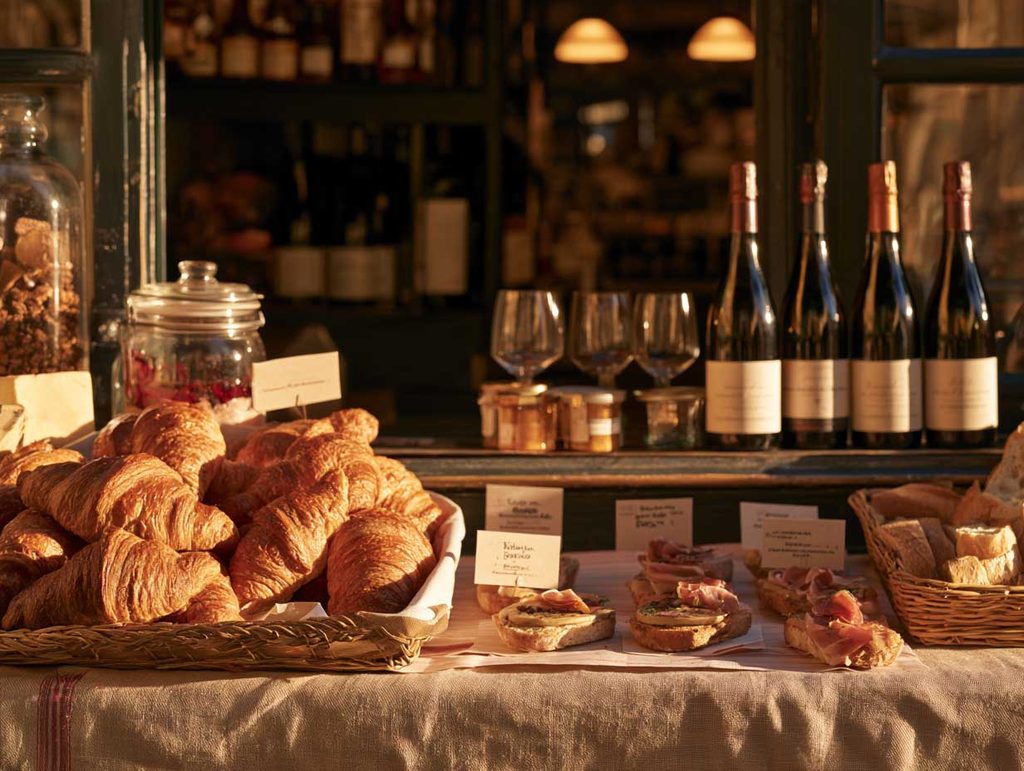
The spectacular Christmas villages that attract the crowds
The Tuileries Christmas Market
Dates: November 14, 2026–January 3, 2027.
Location: Jardin des Tuileries, 1st arrondissement.
Opening hours: Daily, 11 a.m.–11:45 p.m. Free admission.
The Magie de Noël des Tuileries is a Christmas fairground as much as a market.
Its 2026 installation combines 95 chalets and attractions, including 18 chalets dedicated to French creators.
Visitors encounter festive decorations, amusement rides and food stalls selling sweet and savoury winter dishes.
The atmosphere becomes particularly lively after dark, when illuminated attractions transform the gardens.
It is an entertaining destination for families, but considerably less persuasive as a gastronomic excursion.
Much of the food is designed for immediate consumption rather than culinary discovery.
The Tuileries are worth visiting for the spectacle. They should not be confused with an authentic producers’ market.
The La Défense Christmas Market
Dates: November 12–December 31, 2026.
Location: Parvis de La Défense, Puteaux, west of central Paris.
Admission: Free.
The largest Christmas village in the Paris region features more than 300 chalets, according to the city’s 2026 programme.
Its food offering includes aligot, tartiflette, regional specialties and international dishes.
The new 15,000 m² Le Sommet entertainment area includes a 504 m² ice rink and a 20-metre Christmas tree. This section remains open until January 3, 2027.
The scale is impressive, particularly in the evening.
Yet the vast commercial environment is better suited to festive entertainment than the discovery of small food producers.
It is worth visiting for the atmosphere, not as a substitute for Paris’s traditional food markets.
The everyday Paris food markets worth visiting at Christmas
Visitors wanting a less commercial experience should look beyond temporary Christmas villages.
The Marché d’Aligre and its traditional food merchants
Location: Rue d’Aligre and Place d’Aligre, 12th arrondissement.
Opening: Tuesday–Friday, 7:30 a.m.–1:30 p.m.; Saturday–Sunday, 7:30 a.m.–2:30 p.m.
Marché d’Aligre combines outdoor produce stalls with the historic covered Marché Beauvau.
Its merchants sell vegetables, meat, cheeses, charcuterie and other everyday ingredients.
In December, seasonal produce and ingredients for festive meals become particularly relevant.
The atmosphere is energetic, sometimes noisy and unmistakably commercial. Prices vary considerably between merchants.
It is a working neighbourhood market, not a Christmas attraction. That is precisely its value.
The Marché Saint-Quentin and its covered food hall
Location: 85 bis boulevard Magenta, 10th arrondissement.
Opening: Tuesday–Saturday, 8 a.m.–8 p.m.; Sunday, 8 a.m.–1:30 p.m.
Located near Gare de l’Est, Marché Saint-Quentin is Paris’s largest covered food market.
Its historic iron structure houses up to 35 traders, alongside a 100 m² area where visitors can eat food purchased from merchants.
This is an excellent complement to the Alsatian Christmas Market nearby.
Visitors can experience two contrasting sides of Parisian food culture: regional Christmas specialties outside the station and everyday market commerce beneath Saint-Quentin’s roof.
The Marché biologique Raspail
Location: Boulevard Raspail, between Rue du Cherche-Midi and Rue de Rennes, 6th arrondissement.
Opening: Sundays, 7 a.m.–2:30 p.m.
The organic market on Boulevard Raspail offers a different proposition: fresh seasonal ingredients, organic produce and specialist food products.
It is particularly relevant to visitors interested in sustainable sourcing and quality ingredients.
Its prices can be relatively high, but its focus on food is more substantial than the catering stalls of most Christmas villages.
Visitors keen to go beyond tasting can explore Paris cooking classes and culinary workshops to understand how these seasonal ingredients are prepared.
The Marché des Enfants Rouges: an important exception in 2026
Many traditional Paris food guides recommend Marché des Enfants Rouges, founded in 1615.
However, a devastating fire on October 12, 2026, destroyed its covered market structure.
The historic hall remains closed. Four traders resumed limited activity outside on Rue de Bretagne in early November.
Visitors should therefore not plan a normal market lunch inside during Christmas 2026. This distinction matters because older travel guides may still describe the market as fully operational.
The Christmas markets that genuinely deserve a visit
The best choice depends on what visitors want from their Christmas trip.
For authentic regional specialties, Gare de l’Est stands out. For premium food purchases, Salon Saveurs offers greater choice. For atmosphere and craftsmanship, Notre-Dame provides an attractive balance.
The Tuileries and La Défense remain entertaining but are fundamentally mass-market destinations.
For those interested in Parisian culinary life, Aligre, Saint-Quentin and Raspail offer something less theatrical and more revealing.
Paris’s Christmas food culture is not confined to temporary festive stalls. It also survives through the daily routines of cheesemongers, butchers, bakers and specialist merchants.
The most rewarding visit may therefore combine one Christmas market with a traditional neighbourhood food hall.
Beyond December, the city’s programme of French food festivals and gastronomic events provides further opportunities to discover the producers and culinary traditions that make French food distinctive.