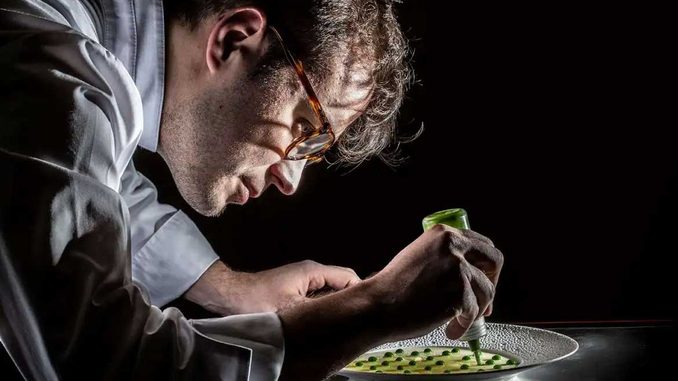
Michelin’s October 2026 selection adds 20 French restaurants, from bistros in Issoire and Blois to ambitious dining rooms in Caen, Paris and the Jura.
On 21 October 2026, the Michelin Guide announced 20 additions to its France restaurant selection, spread across nine regions. These are recommended restaurants, not newly awarded Michelin stars: stars and Bib Gourmand distinctions are announced separately at the annual ceremony.
The October list offers a useful picture of where French dining is moving. In Issoire, Adrien Descouls has opened Basalte, a modestly priced bistro built around Auvergne cooking. Romain Matura puts the produce of the Loire Valley and careful sauce-making at the centre of TABLE in Blois. In Caen, chef Tali brings Brazilian influences into a French kitchen at Indigène.
Elsewhere, the selection ranges from intimate seafood dining in Étretat to a mountain restaurant in the Jura and inventive kitchens in Paris. For travellers, the attraction is variety: small neighbourhood restaurants, rural inns and costly tasting menus appear in the same national selection.
The October announcement rewards restaurants, not new stars
Michelin published its latest additions to the France selection on 21 October 2026. Four restaurants are in Auvergne-Rhône-Alpes, four in Île-de-France and three in Grand Est. The remaining nine are divided among Bourgogne-Franche-Comté, Centre-Val de Loire, Normandie, Nouvelle-Aquitaine, Occitanie and Pays de la Loire. Sixteen of the twenty are outside Île-de-France.
There is an important distinction for diners. Inclusion means Michelin’s inspectors have recommended a restaurant. It does not mean the establishment has obtained a star or a Bib Gourmand. Those awards follow a separate annual process. The guide updates its recommendations throughout the year, marking recent additions as “New” on its website and app.
For diners, that distinction matters more than the headline number.
The Auvergne and Jura kitchens are making regional food relevant
The bistro in Issoire puts truffade ahead of ceremony
In Issoire, Basalte is chef Adrien Descouls’s more informal counterpart to his starred restaurant Origines, around ten minutes away in Le Broc. It stands near the abbatiale Saint-Austremoine. Descouls serves truffade, the Auvergne combination of potatoes and melting fresh tome cheese, with cured ham. His desserts include savarin soaked in artisanal verbena liqueur.
Michelin classifies Basalte in its €€ price category, a useful distinction when fine dining is often equated with expensive tasting menus.
At La Table des Cimes in Malbuisson, Matthias Marc cooks above lac de Saint-Point with smoked cancoillotte, trout roe, comté, Morteau sausage and vin jaune. This is a more ambitious €€€€ proposition. Marc’s return to the Haut-Doubs fits the wider revival of mountain gastronomy in France.
In wine country, Le Saint Amour in Saint-Amour-Bellevue offers surprise menus featuring Arctic char with beetroot and caviar, or pigeon with soy, honey and saffron.
The Loire Valley and western France favour precise, approachable cooking
Under the arcades of place Louis XII in Blois, TABLE is the restaurant of Romain Matura, who came to professional cooking relatively late. His focus is on sauces and local produce. One Michelin-described dish pairs pan-seared John Dory with Beauce beans, basil, mussels and a concentrated sauce made from fish heads. The format changes with the day: bistro-inspired lunch, chef’s-choice dinner.
In Nantes, Sauge occupies 70 rue Desaix, away from the most obvious central dining streets. Timothée Boucard serves lamb ravioli with mint and smoked aubergine, or seared swordfish with grilled leeks and tarragon hollandaise. Its weekly changing lunch menu and €€ Michelin classification make it particularly interesting for a weekday visit.
In Angers, Affamés takes a more urban approach. Near gare Saint-Laud, its raw-concrete dining room houses a market-led menu that might include veal head with mussels or duck with gremolata. The evening offering becomes more extensive.
The Norman coast and Caen offer two very different experiences
At Indigène, 10 rue du 11 Novembre in Caen, chef Tali cooks Franco-Brazilian food while Théo manages the dining room and a wine list devoted entirely to natural wines. It is an alternative to conventional Norman menus, in Michelin’s €€€ bracket.
Étretat provides the contrast. Le 1738, within the historic Les Tilleuls property, has only 12 seats overlooking a garden. Belgian chef Julien Wauthier concentrates on seafood and Norman ingredients, including brill, oysters from Veules-les-Roses and eel. With a €€€€ price rating and limited seating, this is one to plan in advance.
Further south, Clément Artisan Cuisinier brings Clément Papillaud’s product-led cooking to the village of Pujols. Michelin singles out pork belly from Cantal accompanied by sauce made with locally produced black sesame.
The Paris selections show the breadth of the guide
The Indian Arms, in the 2nd arrondissement, mixes Indian pub flavours with a British-inspired bar atmosphere. Cypsèle, on île Saint-Louis, is a more elaborate proposition. Chef Marcin Kròl, formerly of Noma and Le Chateaubriand, works with sommelier Quentin Loisel on a surprise menu that changes daily. Wood-fired cooking and an extensive wine list place it firmly in the €€€€ tier.
alt could hardly be more different. In the 16th arrondissement, a Japanese-Korean couple trained at Taillevent serves traditional French cooking to a maximum of eight guests. Think poireaux vinaigrette and roast pigeon with poivrade sauce, rather than culinary theatre. It sits in the €€ bracket.
The fourth Île-de-France addition lies outside the capital. Cambrousse – Château de la Bûcherie, in Saint-Cyr-en-Arthies, draws on the produce of its estate, with a 65-hectare park, kitchen garden and poultry, supplemented by Atlantic seafood.
The remaining addresses make the national picture complete
Lyon contributes Flair, with French-Japanese dishes such as pork tonkatsu, and Le Comptoir, the traditional bistro at Cour des Loges. Above the city, Cuisine-à-Manger in Saint-Cyr-au-Mont-d’Or pairs market cooking with a panorama of Lyon.
Grand Est offers three contrasting places. At Au Bœuf in Soultz-sous-Forêts, Cédric Rott cooks langoustines with rhubarb and tarragon and offers a more informal brasserie lunch. Strasbourg’s Bistrot des Rosiers puts vegetables, market produce and natural wines first. In the Vosges, La Table de Jean-Mi in Bussang draws directly from a family garden.
Finally, in Beaulieu near Montpellier, Âme marks a new chapter for chef Amélie Darvas and Bérangère Bouton. Its surprise menu includes such combinations as potato mousseline with amaretto, raw cocoa and almond, or hay-smoked quail. It is rated €€€€.
The most useful Michelin discovery is not necessarily a star
The October selection is useful precisely because these restaurants serve different purposes. Basalte and Sauge offer accessible regional cooking; Le 1738 and Cypsèle are occasion restaurants; alt offers eight places and a classical menu.
For a broader perspective, the continuing influence of French culinary traditions helps explain why sauces, seasonality and technique connect otherwise diverse kitchens. Meanwhile, the three-star rise of Les Morainières in Savoie demonstrates what the guide’s annual distinctions can eventually mean for a regional restaurant.
October’s additions need no star to justify a visit. The sharper question is which of these tables offers a convincing reason to change a journey.