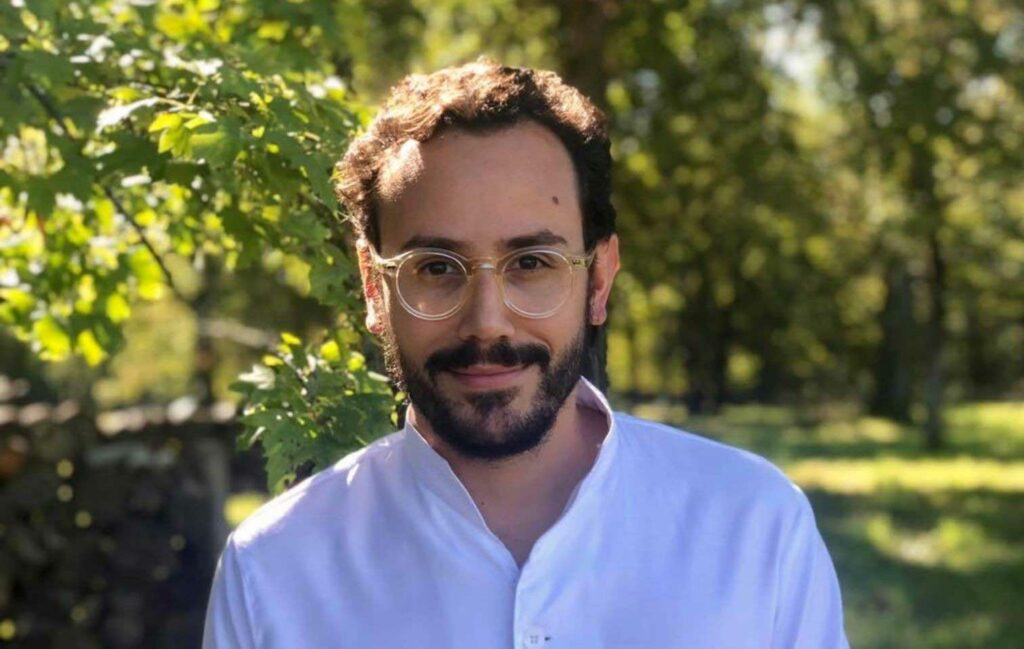
César Troisgros becomes Gault&Millau Chef of the Year 2026, marking an unprecedented third generation victory for the Troisgros dynasty.
The designation of César Troisgros as Cuisinier de l’Année 2026 by Gault&Millau is more than an individual distinction. It marks a historical milestone in French gastronomy. For the first time, the same family has received this title across three generations. Pierre Troisgros in 1987. Michel Troisgros in 2003. César Troisgros in 2026. This rare continuity reflects more than lineage. It signals the ability of a culinary house to evolve without denying its foundations. At Maison Troisgros, now located in Ouches, César Troisgros has reshaped the family legacy around sustainability, territorial anchoring, and contemporary boldness. His cuisine rejects nostalgia. It is direct, precise, and rooted in the present. The award confirms a shift in how culinary excellence is defined in France. Technique alone no longer suffices. Vision, responsibility, and coherence now matter just as much. The Troisgros dynasty has understood this earlier than most.
The historic decision by Gault&Millau
When Gault&Millau announced its 2026 Cuisinier de l’Année, the reaction across the culinary world was immediate. The choice of César Troisgros carried symbolic weight that extended well beyond his own kitchen.
This was not simply the reward of a talented chef in his forties. It was the recognition of a three-generation lineage, something never achieved before in the history of the guide. Pierre Troisgros received the title in 1987. Michel Troisgros followed in 2003. Nearly forty years separate the first and third coronations.
Gault&Millau’s decision reflects an evolution in its editorial line. The guide now values long-term vision, environmental responsibility, and territorial commitment as much as pure technique. César Troisgros embodies this shift.
The place of César Troisgros in the dynasty
César Troisgros did not inherit a blank slate. He inherited a name that shaped modern French cuisine. That inheritance was both a privilege and a burden.
Born into the Troisgros household, he grew up surrounded by chefs, producers, and critics. Expectations were clear. Yet his professional path was not rushed. He trained outside the family sphere, working in France and abroad, absorbing influences that were not strictly Troisgros.
When he returned to lead the kitchen, his approach was deliberate. He did not seek rupture. He sought recalibration.
His cuisine is less about signature dishes than about systems. Systems of sourcing. Systems of energy use. Systems of menu construction. This managerial and ecological dimension distinguishes him sharply from previous generations.
The symbolic weight of Maison Troisgros
Maison Troisgros is no longer in Roanne. That move alone was a statement.
In 2017, the family relocated its flagship restaurant from the city center of Roanne to the rural setting of Ouches, a few kilometers away. The decision was controversial at the time. It is now widely seen as visionary.
The site covers several hectares. It includes gardens, orchards, livestock, and direct access to producers. The restaurant is integrated into a wider ecosystem that includes hospitality, agriculture, and landscape management.
For César Troisgros, this physical environment is not decorative. It defines the cuisine. Ingredients are selected based on seasonal availability, local resilience, and environmental impact.
The result is a cuisine that feels lighter, sharper, and more direct, without sacrificing depth.
The legacy of Michel Troisgros and Pierre Troisgros
Understanding the magnitude of César Troisgros’ distinction requires perspective.
Pierre Troisgros revolutionized French cuisine in the 1970s. Alongside Jean Troisgros, he helped dismantle the rigidity of classical sauce-based gastronomy. His salmon with sorrel became a manifesto for nouvelle cuisine.
Michel Troisgros extended that revolution. His cuisine refined the balance between acidity, spice, and precision. He opened the Troisgros house to global influences while preserving its identity.
César Troisgros did not inherit a style. He inherited a method of questioning.
Where Pierre broke with excess. Where Michel mastered balance. César addresses sustainability, climate pressure, and resource scarcity. Each generation responded to the challenges of its time.
The cuisine defined by sustainability, not ideology
Sustainability is often discussed in abstract terms. At Maison Troisgros, it is operational.
The menu is structured around what can be sourced within a limited radius. Animal proteins are used sparingly. Portions are calibrated. Vegetables are central, not decorative.
Energy consumption is monitored. Waste is measured. Cooking techniques are chosen for efficiency as well as flavor.
This approach is not militant. It is pragmatic. César Troisgros avoids moral discourse. His position is clear: a restaurant must remain viable for decades. That requires adaptation.
Gault&Millau’s recognition signals that this pragmatism is now seen as a marker of excellence.
The contemporary boldness without provocation
César Troisgros’ cuisine is often described as bold. That boldness is subtle.
It does not rely on shock combinations or visual provocation. It lies in restraint. In refusing unnecessary complexity. In trusting raw products.
Dishes are structured with few elements. Acidities are precise. Textures are clean. Spices are used with discipline.
This clarity demands technical mastery. There is no place to hide.
For diners, the experience is coherent. For professionals, it is demanding. That balance explains why the recognition resonates beyond media headlines.
The impact on the image of the Troisgros dynasty
Dynasties in gastronomy are fragile. They often collapse under repetition or nostalgia.
The Troisgros family avoided that trap. The three Gault&Millau titles, spread over nearly four decades, demonstrate adaptability rather than permanence.
César Troisgros’ award reinforces the idea that heritage is not static. It must be reinterpreted.
This has strategic consequences. The Troisgros name remains relevant to younger chefs. It is not perceived as a museum. It is seen as a laboratory.
That perception strengthens the family’s influence far beyond its dining room.
The signal sent to French gastronomy
The choice of César Troisgros sends a clear message to the profession.
French gastronomy is no longer judged solely on luxury or technical excess. It is judged on coherence, responsibility, and longevity.
Young chefs take note. Investors take note. Culinary schools take note.
The award suggests that the future belongs to chefs who think beyond the plate. Who integrate agriculture, ecology, and economics into their craft.
That is not a trend. It is a structural shift.
The broader European resonance
This recognition also resonates beyond France.
Across Europe, fine dining faces similar pressures. Rising costs. Energy constraints. Changing customer expectations.
The Troisgros model offers a blueprint. Not a formula to copy, but a direction to consider.
It proves that excellence can coexist with moderation. That prestige can align with responsibility.
For international observers, this makes César Troisgros’ distinction particularly meaningful.
A future defined by continuity and tension
The Troisgros story is not finished. That is perhaps its most important lesson.
César Troisgros now carries the weight of history and the pressure of expectation. The title does not freeze his work. It intensifies scrutiny.
The challenge ahead is clear. Continue evolving without betraying coherence. Remain demanding without becoming dogmatic. Preserve pleasure while respecting limits.
That tension is productive. It is where great cuisine is forged.
Cook in France is your independant source for food in France.