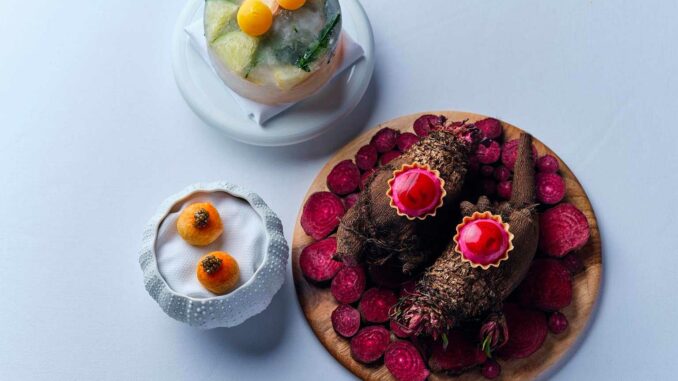
The Bernard Loiseau Group opens Loiseau de Lorraine in Metz, marking a strategic 2026 expansion of Burgundian fine dining across French regions.
On 19 January 2026, the Bernard Loiseau Group announced a major new step in its national development. A new gastronomic flagship, Loiseau de Lorraine, will open in Metz, confirming a clear ambition: to extend Burgundian haute cuisine beyond its historical base. This project is not an isolated opening. It is part of a broader 2026 strategy aimed at regional expansion while preserving the identity built by Bernard Loiseau. For investors and critics, this move raises a central question. Can traditional fine dining still grow in a market under pressure from rising costs, changing consumer habits, and casualisation? By choosing Metz, a regional capital with strong cultural appeal but limited gastronomic flagships, the group sends a precise signal. It is betting on heritage, execution, and brand clarity rather than trend-driven concepts.
The Bernard Loiseau legacy as a strategic foundation
The Loiseau name remains one of the strongest brands in French gastronomy. Built around La Côte d’Or in Saulieu, the legacy rests on clear principles. Product-driven cuisine. Readable plates. Strong regional anchoring. These values survived the death of Bernard Loiseau in 2003 and were stabilised under the leadership of Dominique Loiseau.
Today, the group operates several restaurants, hotels, and culinary brands. The core remains Burgundian gastronomy, executed at a high technical level, without theatrical excess. This consistency explains why the brand still attracts both loyal diners and institutional partners.
Loiseau de Lorraine is designed as a flagship, not a secondary outpost. The group wants to reproduce its model without dilution. That implies tight control over sourcing, staffing, and menu structure.
The choice of Metz as a calculated bet
Metz is not Paris. That is precisely the point. With around 120,000 inhabitants and a wider metropolitan area approaching 400,000, Metz combines administrative importance with moderate competition at the top end of the market.
The city benefits from strong transport links. Paris is reachable in 1 hour 25 minutes by high-speed train. Luxembourg is less than 60 km away. Cross-border business traffic is significant. These factors create a stable base for gastronomic demand.
From a branding perspective, Metz offers visibility without saturation. A Loiseau opening there immediately becomes an event. In Paris, it would risk being one opening among dozens.
The concept behind Loiseau de Lorraine
Loiseau de Lorraine is presented as a gastronomic flagship, not a copy-paste of Saulieu. The menu will reflect Burgundian DNA while integrating local Lorraine products. This includes freshwater fish, game, mirabelle plums, and regional dairy.
The objective is balance. The group avoids folklorism. Dishes will remain technically Burgundian in structure, with sauces, reductions, and precise cooking times. Local products serve as accents, not a thematic constraint.
This approach mirrors the group’s belief that regional excellence travels when it stays disciplined.
The operational challenges of regional fine dining
Opening a high-end restaurant outside Paris comes with constraints. Recruitment is the first. Skilled kitchen staff are scarce. The Loiseau Group mitigates this by internal mobility and long-term training programs.
Supply chains are another challenge. Premium ingredients must arrive fresh, regularly, and at controlled cost. This requires logistics comparable to Paris-level operations.
Finally, pricing strategy must be realistic. Average tasting menus in regional cities rarely exceed €120 to €150, compared to €200 and above in Paris. Margins depend on volume stability rather than peak pricing.
The investor perspective on the 2026 expansion plan
From an investor standpoint, Loiseau de Lorraine is a signal of confidence. The group is not chasing rapid franchising. It is expanding slowly, with capital-intensive projects and long return horizons.
This suggests a belief that traditional fine dining is not structurally declining, but repositioning. Demand still exists for formal gastronomy, provided the experience is clear, generous, and emotionally anchored.
For critics, the question is whether the Loiseau model can remain attractive to younger audiences. The group’s answer is consistency. It does not seek to imitate bistronomic or hybrid concepts.
The broader context of French gastronomic resilience
The timing of the announcement matters. French fine dining has faced intense pressure since 2020. Energy costs rose by more than 40 % between 2021 and 2024. Labour costs followed. Many independent restaurants closed or downsized.
Against this backdrop, the Loiseau Group’s expansion reads as a counter-narrative. It suggests that well-capitalised, clearly positioned houses can still grow.
This does not apply to all models. Experimental cuisine and ultra-minimalist dining struggle to justify price points outside major capitals. Heritage-driven gastronomy, by contrast, benefits from recognisable value.
The symbolic value of Burgundian cuisine abroad
Burgundian cuisine occupies a special place in French culinary identity. It is technical but accessible. Rich but structured. Sauces are central. Cooking is legible.
Exporting this cuisine within France is easier than exporting experimental concepts. Diners understand what they are paying for. This clarity reduces risk.
Loiseau de Lorraine leverages this advantage. It sells reassurance as much as refinement.
The critical expectations surrounding the opening
Critics will scrutinise execution. The Loiseau name carries expectations. Sauces must be precise. Cooking temperatures exact. Service formal but fluid.
Any compromise will be noticed. This pressure is the price of heritage. The group is aware of it and has structured the opening accordingly, with experienced management and a gradual ramp-up.
The long-term implications for the Loiseau brand
If successful, Loiseau de Lorraine will validate a replicable model. Not mass replication. Selective, regional flagships rooted in strong urban centres.
This could lead to further openings in cities such as Tours, Dijon beyond the historic base, or even Bordeaux. Each would follow the same logic. Regional capital. Cultural density. Limited top-tier competition.
The opening of Loiseau de Lorraine is more than a restaurant launch. It is a statement. French fine dining does not need to abandon its codes to survive. It needs to apply them with discipline, in the right places, for the right audiences. Metz is the test case. The rest of the country is watching.
Cook in France is your independant source for food in France.