Crust Art, ornate pâté en croûte, Beef Wellington and retro aspics are back, as chefs reject minimalism for visual, banquet-style French cuisine.
A trend report published on 19 January 2026 has sent a clear signal across the French food industry. The age of ultra-minimalist plating is losing momentum. In its place, a highly visual, generous, and unapologetically ornate style is returning. Known as Crust Art, this movement revives elaborate pastry work on classics such as pâté en croûte and Beef Wellington, alongside the unexpected comeback of retro aspics. Chefs like Éloi Spinnler, at his new restaurant Envie, are leading this shift. Their dishes borrow from Renaissance banquets, bourgeois buffets, and hotel dining rooms of the 1960s and 1970s. The appeal is obvious. These dishes photograph well, slice dramatically, and project abundance. On social media, they outperform delicate quenelles and abstract sauces. What looks like nostalgia is, in reality, a strategic repositioning of French gastronomy toward emotion, craftsmanship, and spectacle.
The end of minimalist dominance in fine dining
For nearly fifteen years, fine dining aesthetics were driven by restraint. Plates became smaller. Garnishes disappeared. Sauces turned into dots. Chefs spoke the language of purity, clarity, and reduction. This approach shaped Michelin-level restaurants across Europe.
By 2025, fatigue had set in. Diners began to question value perception. A €95 menu built around three vegetables and a foam no longer felt convincing. According to industry surveys cited in the January 2026 report, 62 % of French diners associate generosity with quality, a figure up 14 points in five years.
Minimalism also struggles online. A perfectly cooked carrot does not compete visually with a pâté en croûte revealing four layers of meat, jelly, and pistachio once sliced. Algorithms reward volume, contrast, and recognisable forms. This reality is now shaping kitchen decisions.
The definition of Crust Art as a culinary statement
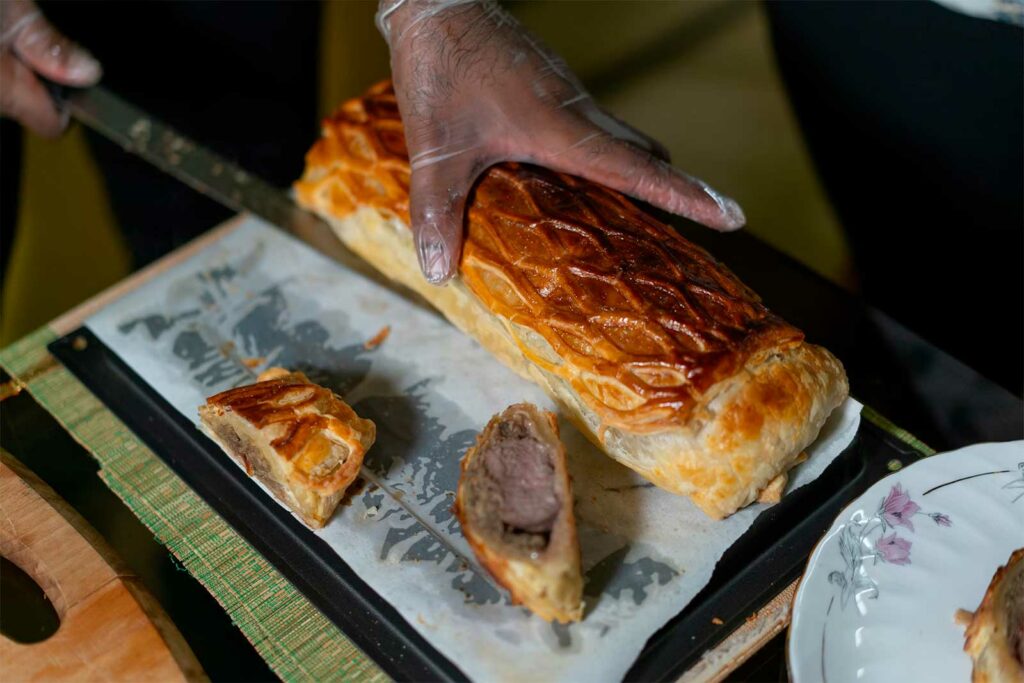
Crust Art refers to decorative pastry techniques applied to savoury dishes. It includes engraved dough, braided borders, heraldic motifs, leaves, fleurs-de-lys, and lattice work. These elements are not new. They originate in medieval and Renaissance European cuisine, where pastry served both as cooking vessel and edible ornament.
What is new is their deliberate return as a visual manifesto. Crust Art rejects discretion. It embraces excess. A modern pâté en croûte can measure 30 cm in length (12 in), weigh 2.5 kg (5.5 lb), and require two days of preparation. This labour is part of the message.
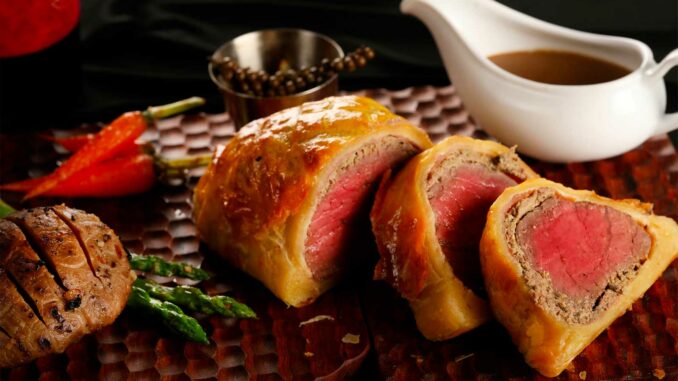
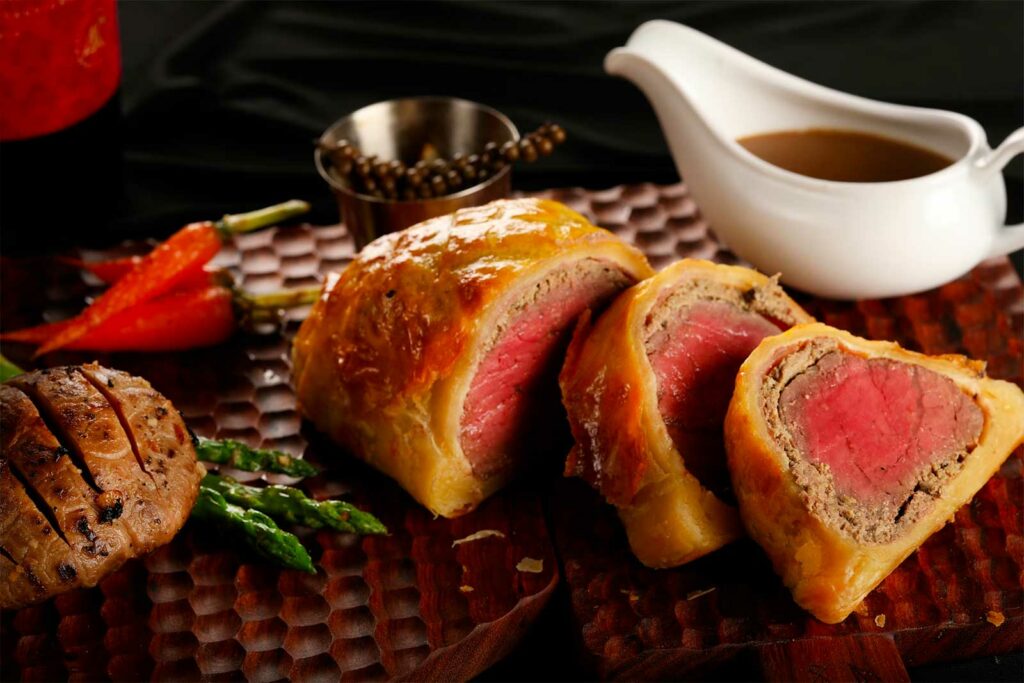
The same logic applies to Beef Wellington. Long dismissed as outdated, it is reappearing with embossed puff pastry, dyed dough patterns, and high-contrast cuts that expose beef, mushroom duxelles, and ham in perfect alignment.
The technical demands behind decorative pastry
Crust Art is not nostalgic amateurism. It is technically demanding. Decorative pastry must withstand long cooking times without collapsing. Dough thickness varies between 2 mm and 5 mm depending on location. Steam vents must be hidden within patterns to avoid rupture.
Aspics impose similar constraints. A clear jelly requires precise collagen ratios, typically 18 to 22 g of gelatin per litre (0.6 to 0.7 oz per quart) for slicing firmness. Clarity demands repeated filtration and temperature control below 85 °C (185 °F) to avoid clouding.
This is craftsmanship, not gimmickry. It explains why many chefs trained in classical charcuterie and hotel kitchens are now central figures in the trend.
The role of Éloi Spinnler and Envie in the revival
At Envie, Éloi Spinnler positions Crust Art as an emotional experience. His approach draws on Alsatian and Central European traditions, where pâtés and jellied dishes never disappeared.
One of his signature dishes features a veal and poultry pâté en croûte, decorated with vine motifs, served in thick slices rather than dainty portions. Another revisits tomato aspic, updated with fermented vegetable juice and herbs, but presented in a mould clearly inspired by 1970s buffet culture.
Spinnler’s philosophy is direct. Food must look festive. It must invite sharing. It must justify the time spent at the table. This clarity resonates with diners and peers alike.
The comeback of aspics as visual architecture
Aspics were once symbols of culinary precision. In the mid-20th century, they represented modernity, refrigeration mastery, and control over texture. Their decline came from industrial misuse and bland execution.
The current revival reframes them as edible sculpture. Chefs now use layered moulds, contrasting colours, and embedded elements such as herbs, seafood, or vegetables cut with millimetric accuracy.
A modern aspic might combine three textures, four colours, and two temperatures at service. When unmoulded, it delivers an immediate visual impact, ideal for photography and tableside presentation.
The influence of social media on banquet aesthetics
The trend report highlights a clear correlation between Crust Art and online visibility. Posts featuring ornate savoury pastries generate 2.3 times more engagement on Instagram than minimalist plates, according to aggregated industry data.
Video formats amplify this effect. The moment of slicing, the release of jelly, and the reveal of internal layers provide narrative. These dishes tell a story in ten seconds.
Chefs understand this. Banquet-style presentations now appear not only in fine dining but also in bistros, wine bars, and private dining formats. Large centrepieces create communal moments that translate well on screen.
The economic logic behind visual generosity
There is also a business rationale. Large format dishes improve margin perception. A pâté en croûte served for €12 to €16 per slice creates a sense of value without requiring luxury ingredients throughout.
Preparation is time-intensive but scalable. One mould serves multiple guests. Waste is limited. The result is a dish that balances cost control with perceived abundance.
Restaurants also benefit from differentiation. In a saturated market, recognisable visuals help establish identity faster than abstract culinary discourse.
The cultural roots of Renaissance kitsch
The term Renaissance Kitsch is deliberately provocative. It acknowledges excess while reclaiming it as cultural expression. This aesthetic borrows from historical banquets, church feasts, and bourgeois dining rooms, where food was meant to impress before it was meant to surprise.
This return reflects a broader societal mood. After years of restraint, diners seek reassurance. They want food that feels celebratory, stable, and generous. Ornate crusts and aspics provide that comfort without sacrificing technique.
The limits and risks of the movement
Not every dish benefits from decoration. There is a risk of superficial imitation. Poorly executed Crust Art quickly looks heavy or outdated. Inspectors and critics remain unforgiving when technique does not match ambition.
The trend also demands space, equipment, and trained staff. Not every kitchen can support it. This will likely keep Crust Art concentrated in restaurants with strong classical foundations.
Where French gastronomy is heading next
The return of Crust Art and aspics signals a recalibration, not a regression. Minimalism is not disappearing. It is losing exclusivity. French cuisine is broadening its expressive range.
The most interesting restaurants in 2026 are those that master both restraint and abundance. They understand when silence works and when spectacle matters. Renaissance kitsch is not irony. It is confidence.
Cook in France is your independant source for food in France.