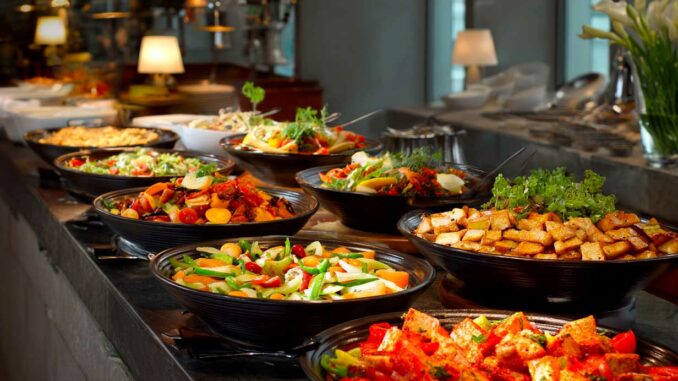
From anti-waste buffets in Paris to radical plant-based menus in the Basque Country, French gastronomy is undergoing a quiet but structural shift.
French gastronomy is often described as slow to change. That view is no longer accurate. Over the past two years, two parallel movements have gained traction, not on the margins, but at the heart of professional dining. On one side, anti-waste cuisine is moving from charity kitchens to premium formats, including buffet dining designed around surplus and rejected produce. On the other, high-end vegan gastronomy is no longer limited to urban niches. It is now entering traditional terroirs where meat, fish, and dairy were once non-negotiable. The opening of Envie le Banquet in Paris by chef Éloi Spinnler and the decision by Fabrice Idiart to convert Le Moulin d’Alotz to a 100% vegetable-based menu illustrate a deeper structural split. These are not marketing stunts. They respond to economic pressure, ecological constraints, and changing diner expectations. Together, they show how French dining is fragmenting into new models that challenge the very definition of luxury and tradition.
The structural pressure reshaping French gastronomy
French restaurants are operating under constraints that did not exist a decade ago. Food costs have risen sharply since 2021. Energy prices remain volatile. Recruitment is difficult. At the same time, waste reduction targets have become explicit, both socially and politically.
According to official figures, nearly 10 million tonnes of food waste are still generated annually in France, with catering accounting for a significant share. Restaurants are no longer judged only on taste and technique. They are judged on resource management.
This context explains why innovation is not always aesthetic. It is operational.
Two responses stand out. One focuses on using everything. The other on removing entire categories of ingredients.
The anti-waste buffet as a premium concept
Buffets have long suffered from a poor image in France. They are associated with quantity over quality and, paradoxically, massive waste. The anti-waste buffet turns this logic upside down.
The Envie le Banquet model
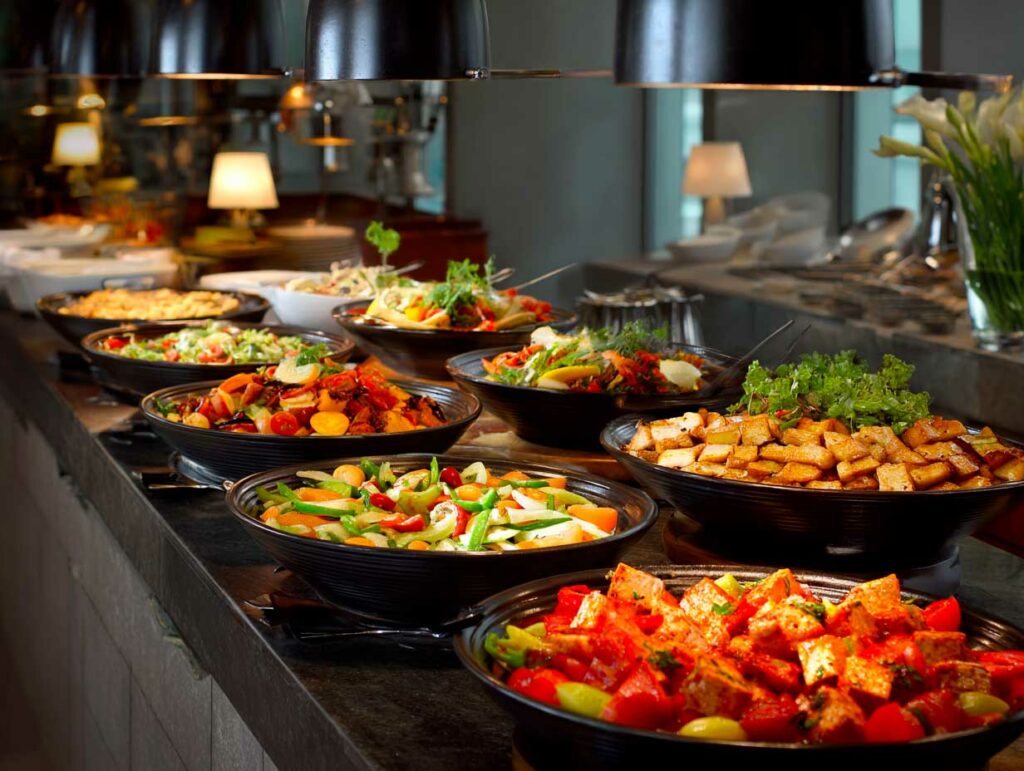
In September, chef Éloi Spinnler opened Envie le Banquet in Paris. The concept is clear and unapologetic. A high-quality buffet built almost entirely from products that would otherwise be discarded.
These include vegetables outside cosmetic standards, surplus production, unsold bread, and by-products often ignored by traditional kitchens. The price point is deliberately positioned above mass-market buffets, typically around 30 to 40 euros per person, depending on service.
The ambition is not to hide the origin of ingredients. It is to make it visible.
The technical challenge behind zero-waste cooking
Cooking from surplus is harder than it looks. Supply is irregular. Quantities vary daily. Standardized menus are impossible.
This forces chefs to work differently. Recipes must be modular. Seasoning must adapt. Preservation techniques such as fermentation, dehydration, and pickling become essential tools, not trends.
At Envie le Banquet, dishes change daily. Vegetable trimmings become purées. Overripe fruit becomes compote or vinegar. Bread becomes crumbs, bases, or sauces.
This is operational gastronomy, not moral posturing.
Why the buffet format matters
The buffet format solves a specific problem. It allows flexibility without disappointing diners. If one ingredient runs out, another replaces it. There is no broken promise of a fixed menu.
It also changes the diner’s behavior. Guests choose portions. Waste shifts from kitchen to plate, where awareness is immediate.
This is not accidental. Studies show that self-served formats can reduce waste by 20 to 30% when properly designed.
The rise of radical plant-based gastronomy in terroir regions
If anti-waste cuisine rethinks how food is used, plant-based gastronomy questions what food is used at all.
A decisive shift in the Basque Country
In December, chef Fabrice Idiart, at Le Moulin d’Alotz, announced that his restaurant would move to a 100% vegetable-based menu.
This decision carries symbolic weight. The Basque Country is a region defined by lamb, fish, charcuterie, and dairy. Removing animal products is not neutral.
Idiart framed the move as a logical evolution rather than a rupture. He cited environmental responsibility, creative renewal, and a desire to explore vegetables with the same depth once reserved for proteins.
Plant-based does not mean minimalist
High-end vegan cuisine is often misunderstood. It is not about subtraction. It is about complexity.
Vegetable gastronomy requires advanced techniques to build texture, umami, and length on the palate. Fermentation, roasting, aging, and reduction become central.
At Le Moulin d’Alotz, legumes replace protein structure. Seaweed replaces marine salinity. Vegetable broths replace meat stocks, often requiring longer extraction times.
This cuisine is labor-intensive. It is not cheaper by default.
A cultural risk taken consciously
Moving to a fully plant-based menu in a terroir restaurant risks alienating part of the traditional clientele. Idiart acknowledged this openly.
The calculation is strategic. Younger diners, urban tourists, and international guests increasingly seek vegetable-focused fine dining. They are willing to travel for it.
This is not about ideology. It is about long-term positioning.
Two trends, one shared reality
At first glance, anti-waste buffets and vegan haute cuisine seem unrelated. One embraces abundance. The other restricts ingredients.
In reality, they respond to the same pressures.
Resource scarcity and cost control
Animal products are expensive and volatile. Reducing or eliminating them stabilizes costs.
Surplus ingredients are cheaper or free, but require skill. Both models trade purchasing power for expertise.
Changing definitions of luxury
Luxury is no longer defined solely by rarity or price. It is defined by intention.
A perfectly executed vegetable dish can now signal refinement. A buffet can be premium if it demonstrates intelligence and ethics.
This marks a break from the protein-centric luxury of the past.
A generational shift among chefs
Many chefs driving these changes are in their thirties and forties. They trained in classical kitchens but operate in a different world.
They speak openly about burnout, sustainability, and meaning. Their projects reflect that honesty.
The limits and contradictions of these models
These trends are not without flaws.
Anti-waste cuisine depends on external waste. If upstream practices improve, supply shrinks. That is a paradox.
Plant-based fine dining can feel disconnected from local agricultural realities if vegetables are exotic or imported.
Both models risk becoming labels rather than practices if scaled poorly.
The difference lies in execution.
What this split says about the future of French dining
French gastronomy is not abandoning tradition. It is fragmenting.
On one axis, chefs redesign systems. On another, they redesign plates.
The common thread is refusal to maintain the status quo.
Some restaurants will double down on meat and classic luxury. Others will build reputations on restraint and intelligence.
The market is large enough for both. What is disappearing is neutrality.
A new professionalism, not a moral lesson
The most important point is often missed. These chefs are not preaching.
They are solving concrete problems with culinary tools.
Waste is a cost. Vegetables are an opportunity. Buffets are flexible. Terroir can evolve.
This is applied gastronomy, grounded in reality.
The success or failure of these models will not be decided by ideology, but by consistency, flavor, and economic balance.
French dining has always adapted. It is simply doing so again, in a language better suited to the times.
Cook in France is your independant source for food in France.